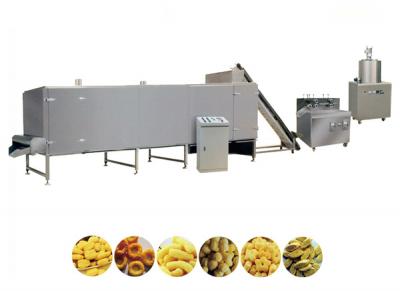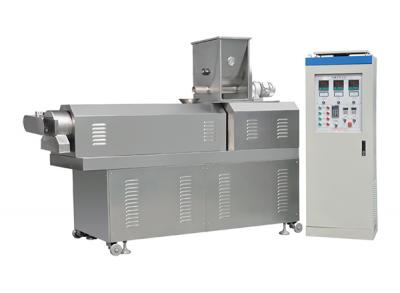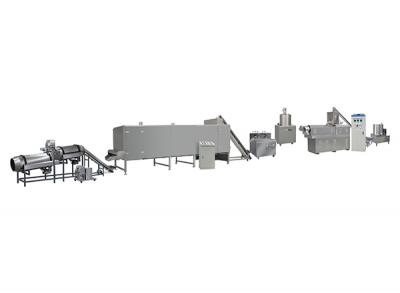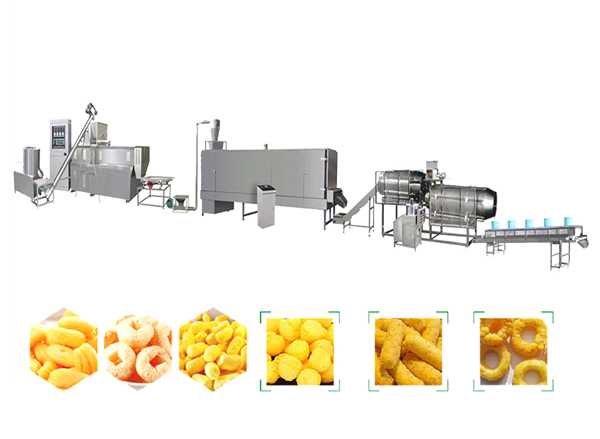
Puffed food processing equipment
This puffed snack food production line is suitable for various raw materials such as rice, flour, and grains. It can produce multiple products like crispy rice crackers, wheat puffs, breakfast cereals, and filled puffed snacks. The molds and processes are adjustable, offering strong adaptability. The equipment comes in multiple specifications with a full range of production capacities, stable energy consumption, and efficient operation, meeting the production needs of different manufacturers. The entire production line features a high degree of automation, streamlined processes, simple operation, and flexible configuration. From design, material selection, production to acceptance, the equipment undergoes strict quality control at every stage, with multiple quality inspections ensuring stable quality and outstanding cost performance.
Breakfast cereal, snack food production line, puffed food production line, puffed snack food equipment, puffed snack food production line, puffed food production equipment, puffed snack food production equipment, puffed snack food machinery
Introduction: Breakfast cereals and snack foods are crispy foods with a smooth texture and rich grain flavor. Breakfast cereal products are processed using an extruder with a special structure, which improves yield, quality, and raw material adaptability compared to traditional methods, making it possible to fortify with micronutrients such as vitamins and minerals. This production line features multiple optional models, flexible equipment configuration, a wide range of raw materials, diverse product types, and simple operation. By changing different molds and production processes, it can produce various puffed foods popular in the market, suitable for all types of food manufacturers.
Product Type Equipment Configuration
Sandwich biscuit, roll mixing machine, twin-screw extruder, sandwich machine, shaping machine, high elevator, oven, elevator, oil spraying machine, drum, seasoning machine
Puffed snack powder mixer, twin-screw extruder, air conveyor, oven, elevator, oil spraying machine, drum, seasoning machine
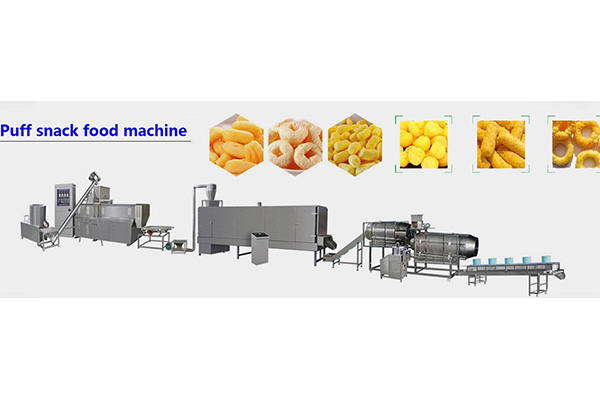
Wheat snack powder mixer, twin-screw extruder, filling machine, shaping machine, elevator, spreading machine, oven, oil spraying machine, sugar spraying machine, spreading machine, oven, cooling machine
Nutritious breakfast mixing machine, screw feeder, twin-screw extruder, air conveyor, flaking machine, air conveyor, oven
Crispy rice mixing machine, twin-screw extruder, shaping machine, frying machine, seasoning machine
I. Snack food production line process flow:
Raw material preparation → Mixing → Conveying → Extrusion puffing → Conveying → Drying → Oil spraying → Seasoning → Packaging
2. Configuration of puffing food production line equipment:
Powder mixer → Feeder → Puffing machine → Air conveyor → Multi-layer oven → Elevator → Oil sprayer → Drum → Packaging machine
3. There are mainly three types of production lines, currently the most common on the market is the SLG65-III production line
Model Parameters |
DT65-Ⅲ Snack Food Equipment |
DT70 puffing food equipment |
DT85 Food Extruder |
Main Motor Power |
22KW |
45KW |
90KW |
Installed Capacity |
70KW |
100KW |
170KW |
Actual power consumption |
45KW |
70KW |
100KW |
Production capacity |
120-150kg/h |
220-260kg/h |
300-400kg/h |
Dimensions |
14×1.3×2.4 |
16×1.3×2.4 |
18×1.3×2.4 |
4. Composition of puffing food production equipment process:
1. Powder mixer: Mix corn flour, wheat flour, rice flour and other raw materials with additives and a certain amount of water evenly.
2. Feeder: Convey the mixed raw materials to the extruder hopper.
3. Extruder: Raw materials enter the extrusion system from the feeding hopper and are processed under high temperature and high pressure to produce products (diverse products can be configured differently based on the product type).
4. Air conveyor: Uses the wind force of a fan to transport raw materials to the oven, with different fans configured according to the product.
5. Multi-layer oven: Most ovens are electric ovens, with temperatures ranging from 0 to 200 degrees Celsius, adjustable via the control cabinet. The interior features a stainless steel double-layer mesh belt, and the baking time can be adjusted according to speed. Available in three-layer, five-layer, and seven-layer stainless steel ovens;
6. Seasoning line: Includes octagonal drum, cylindrical drum, lifting single drum, and double drum seasoning lines, configured according to production volume and product characteristics. Additionally, there are oil spraying, sugar spraying, and coating equipment.
Equipment quality control:
1. Preliminary design control of equipment
Technical personnel carry out scientific and reasonable design based on the actual conditions and requirements of the customer's factory, power supply, location, etc., combined with equipment testing conditions.
2. Standard for selection of spare parts
Spare parts suppliers are strictly selected, choosing high-quality and cost-effective manufacturers in the industry. While ensuring quality, the manufacturing cost of the equipment is reduced, allowing customers to purchase cost-effective equipment. For the same type of outsourced parts, three suppliers are guaranteed to ensure a true selection of the best.
3. Production control
After the sales department receives an order, it submits it to the technical department, which produces the corresponding CAD drawings for the equipment based on the order details. The production department arranges for relevant parts to be procured, produced, and processed according to the CAD drawing technical documents.
4. Equipment and Parts Acceptance
► There are dedicated quality control personnel who conduct batch inspections of outsourced and externally processed parts. For critical and precision components, 100% quality inspection is carried out.
► For self-made parts, self-inspection, mutual inspection, and final inspection must be carried out by processing personnel, and they can only be put into use after all inspections pass.
► After the finished equipment is installed, after-sales technical personnel will conduct acceptance. The on-site equipment must run without load for more than half an hour without any faults before loading for on-site debugging. Ensure that each piece of equipment meets factory conditions and issue an equipment certificate of conformity.