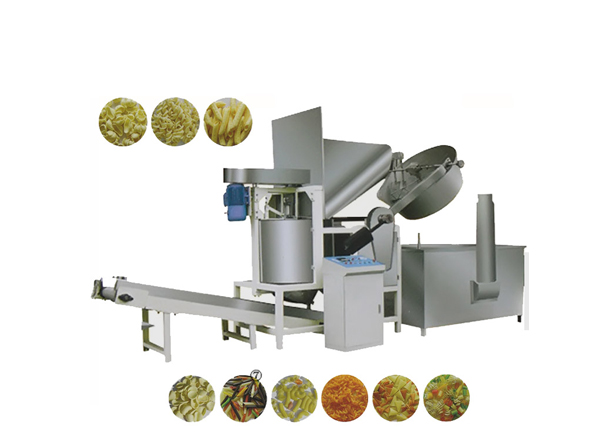
Crispy rice cracker production line
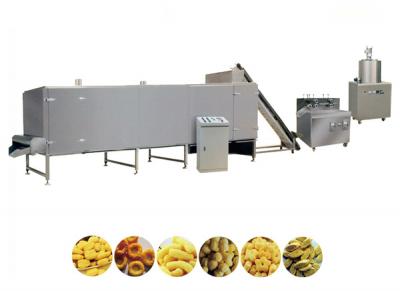
1. Multi-model and flexible production change: By simply changing the mold, you can produce various shaped puffed foods such as rice crackers, salad, banana chips, pizza rolls, shell-shaped crisps, cat-ear crisps, and curly crisps. The shapes are realistic and the texture is crispy, making it easy to adapt to market changes.
2. Direct frying, oil-saving and non-greasy: The extruded products can be fried directly without drying. After puffing, the texture is fine and less prone to oil absorption, saving oil while offering a crispy and easily digestible taste. The process is simple with low equipment investment.
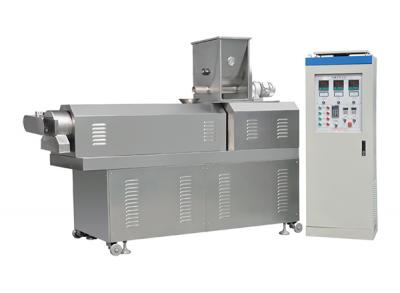
3. Intelligent control, stable and high output: Variable frequency speed control combined with a control cabinet provides intuitive display of various parameters. The operation is simple and easy to learn, with stable production and a capacity ranging from 100 to 250 kilograms per hour.
4. Perfect after-sales service, worry-free: The company provides free formulas, on-site training, regular follow-ups, equipment upgrades, and lifelong maintenance. Non-human damage during the warranty period is repaired free of charge.
With economic development and rising consumption levels, consumers' demand for the quantity and quality of snack foods continues to grow. Packaged small snacks, being convenient and hygienic to eat, have become increasingly popular. Puffed snack foods, in particular, are favored by more and more consumers. As a type of snack food, crispy rice crackers have always been well-liked. The crispy rice cracker production line is an advanced automatic fried puffed food equipment developed by Datong Machinery Company based on domestic and international market demands. Its operational performance, product quality, and process taste have reached the advanced level of the same industry.
The installation and operation of this crispy rice snack food processing equipment are simple, with adjustments made via a frequency converter. Various production data indicators can be directly viewed from the control cabinet. It offers stable output, simple operation, and is easy to learn and understand, making it an ideal choice for crispy rice snack manufacturers. This multifunctional puffing machine can also produce various other puffed foods in different shapes by changing molds. Its features include a crispy texture, being oily but not greasy, leaving a lingering fragrance after eating, and promoting intestinal digestion, making it one of the favorite snacks among consumers.
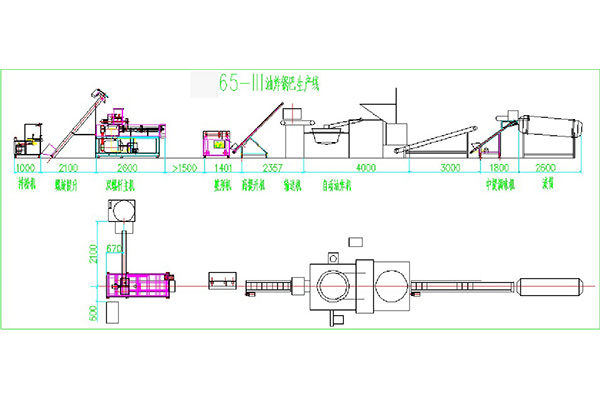
In addition, this production line adopts screw extrusion technology, supplemented by extrusion molds of various shapes for forming, followed by frying and seasoning to produce fried pasta foods such as "salad", "banana chips", "pizza rolls", "shell crisps", "cat ear crisps", "snails", and "Miao Crisp Corner" in various shapes and flavors. The products have realistic shapes, fine texture, and crispy taste. Extruded products can be fried directly; after puffing, they do not easily absorb oil, saving oil without greasiness, and have a crispy texture that is easy to digest. No drying is required, the production process is simple, and the equipment investment is small, making it an ideal choice for starting a factory.
I. Process flow of crispy rice food processing equipment:
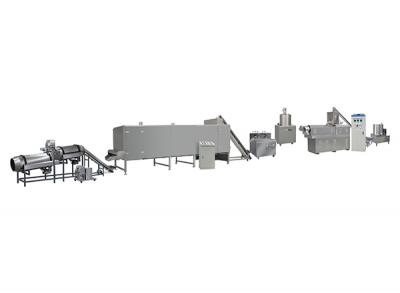
Raw material preparation → Stirring and feeding evenly → Extrusion puffing → Shaping and cutting → Automatic frying → Seasoning → Packaging
2. Equipment configuration of the crisp rice food production line:
Dough mixer → Twin-screw extruder → Shaping and cutting machine → Automatic frying machine → Octagonal drum → (Packaging machine)
3. There are mainly two models of the crisp rice production line:
Model |
BFJ-III |
SLG65-III |
ZXJ |
YZG |
BJT |
Name |
Powder mixer |
Twin-screw extruder |
Shaping and cutting machine |
Deep fryer |
Star anise cylinder |
Total installed capacity kw |
3 |
35 |
1.1 |
55.0 |
0.55 |
Actual power consumption kw |
2 |
22 |
0.8 |
45 |
0.4 |
Production capacity |
25kg/H |
100~150kg/h |
100-150kg/h |
100-250kg/h |
100-150kg/h |
Dimensions m |
1x0.6x1.1 |
2.6x0.9x1.8 |
1×0.65×1.1 |
5.2×1.7×3 |
1.1×1.2×1.8 |
4. Process composition of the crispy rice food production line:
1. Mixer: According to the snack food formula, mix the main ingredients (corn flour, rice flour, etc.) alone or with additives, adding a certain amount of water and stirring thoroughly.
2. SLG65-III twin-screw extruder: produces pellets through extrusion puffing.
3. Shaping and Cutting Machine: Cuts and imprints patterns on the long strip-shaped semi-finished products from the extruder.
4. Automatic Fryer: Available in coal-fired and electric fryer types, which can be selected based on specific conditions. After frying and oil draining, the products are sent to the seasoning line.
5. Seasoning line: includes octagonal drum, round drum, single-drum lifting, and double-drum seasoning lines. After frying, flavoring materials are sprayed inside the drum, and the drum rotates to ensure even seasoning.
6. Packaging machine: vertical packaging machine or combined computer weighing packaging machine, capable of selectively packaging different bag types.
5. Company after-sales service commitment
1. Formula: The company's after-sales service personnel can provide the ingredients and basic formula of related products.
2. Training: On-site training for the relevant personnel of the demand side on equipment operation and regular maintenance.
3. Follow-up: Regular after-sales phone follow-ups with customers to help you solve related difficult problems encountered during equipment use.
4. Maintenance: Our company provides high-quality and affordable spare parts to customers year-round, along with equipment upgrades and new product development support, truly ensuring you have no worries.
5. Warranty Maintenance: If equipment damage occurs after the warranty period expires, upon receiving notification from the customer, we will arrive at the repair site within two days for provincial users. For out-of-province users, we will coordinate with technical personnel to arrive as soon as possible. For out-of-warranty equipment, the company will charge service and spare parts replacement costs.
6. Out-of-Warranty Maintenance: If equipment damage occurs during the warranty period due to non-human factors, the company provides free repairs. For damage caused by human factors or force majeure, the company offers repair services but charges relevant fees.