Advantages of Extruded Aquatic Feed
Let me introduce the advantages of extruded fish feed.
Advantages of extruded aquatic animal feed
1. Convenient feeding management
Extruded aquatic feed can float on the water surface (or in the water) for a relatively long time. When feeding, there is no need to set up a special feeding platform; simply feed at a fixed spot. Fish need to come to the surface to eat, which allows direct observation of their feeding behavior, timely adjustment of the feeding amount, and prompt analysis of fish growth and health status. Therefore, using extruded aquatic feed helps with scientific feeding management, saving a lot of work time and improving labor productivity.
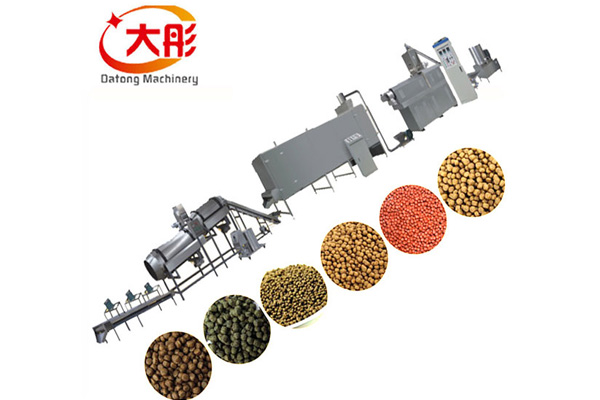
2. Prevents feed waste
The aquatic extruded feed of the present invention has good stability in water and does not dissolve for 2 hours (sometimes up to 10 hours), preventing nutrient loss in water and feed from sinking into mud. Residual feed is also easy to pick up and dry in sunlight, reducing feed waste. Test results show that using aquatic extruded feed can save about 10% in feed costs compared to powdered or hard pellet feed.
3. Reduces water pollution
Aquatic extruded feed does not dissolve or sink in water, thus preventing residual feed from fermenting in the water, reducing the oxygen demand of organic matter in the water, and effectively lowering pollution caused by environmental water quality.
4. High feed utilization rate
During puffing, high temperature treatment can be applied to gelatinize starch, stabilize fat, and destroy and soften fiber tissue structure and cell walls, thereby continuously improving the utilization rate of various main nutrients. Extrusion puffing can significantly reduce the content of free gossypol in cottonseed and cottonseed meal, and also has a good detoxification effect on glucosinolates in rapeseed meal and toxic plant proteins in castor seed meal. At the same time, these puffing technology processes also destroy harmful chemical substances and anti-nutritional risk factors such as trypsin inhibitors in soybean meal, thereby effectively improving the palatability and digestibility of raw materials. Therefore, aquatic extruded feed in China has a higher utilization rate compared to powdered and pelleted feed.
5. Feed storage length
The puffing process results in low moisture content, high particle hardness, and low crushing rate of aquatic extruded feed. During the puffing process, most microorganisms, fungi, and insects are killed, so the extruded feed has a longer storage period and is easy to store and transport.
6. Disease Prevention
The feed is treated with instantaneous high temperature during puffing, which can effectively kill pathogens such as Escherichia coli and Salmonella. Moreover, these extruded feeds have strong water (oil) absorption properties, facilitating the addition of disease prevention and treatment drugs. Thus, we can effectively prevent various digestive system diseases in society caused by unclean Chinese feed.
7. Improve Feed Energy
Hard pellet feed makes it difficult to increase the amount of oil added in China, while extruded feed can add oil according to the nutritional needs of aquatic animals in China, allowing the oil to be evenly dispersed in the feed, improving energy management levels, and fully meeting the growth needs of aquatic animals.
8. Adapt to multiple needs
Since the temperature and pressure of the extruder are adjustable, it can not only produce floating feed (for upper-layer fish and frogs), slow-sinking feed (for middle and lower-layer fish), and sinking feed (for shrimp and crabs), but also meet some special requirements, such as low-moisture feed and high-fiber feed.