Principle of Extrusion for Aquatic Feed
Extrusion-expanded aquatic feed is a high-quality, environmentally friendly feed with low pollution, minimal waste, high efficiency, and high conversion rate. Using different extrusion-expanded feeds is an important means for production enterprises to provide high-quality, information-secure animal products and ensure human health. It is also the future development trend of China's feed industry. Moreover, it has become an inevitable choice for the development of the aquatic feed industry, which is centered on green and environmental protection. Below is an introduction to the principles of extrusion processing technology.
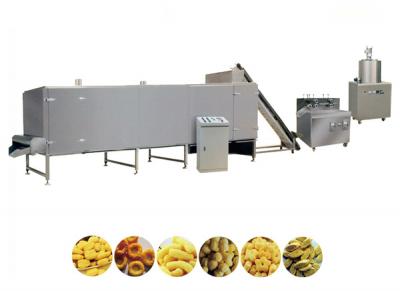
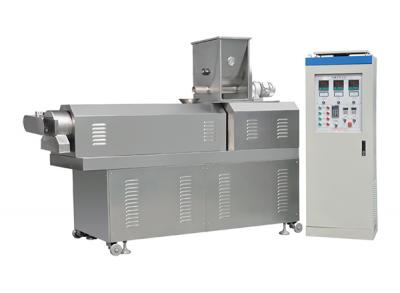
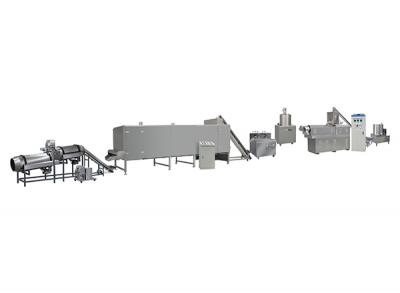
Feed extrusion machinery: Extrusion utilizes the squeezing and shearing effects of the screws and screw barrels inside the extruder on the material to continuously raise its temperature and pressure. The high-temperature, high-pressure material is then forced through the die holes, causing sudden pressure drop and resulting in volume expansion. Extrusion can be processed and analyzed in two ways: dry and wet. In dry extrusion, food processing enterprises do not need to add moisture to the raw materials, and the raw materials are not conditioned before entering the extrusion chamber. The heat generated during the extrusion process cannot be entirely produced by the mechanical interaction of the raw materials with the screws, shear plates, and the inner wall of the extrusion chamber. The structure of a wet extruder is more complex than that of a dry extruder. Before entering the extrusion chamber, the raw materials are first conditioned to improve the degree of gelatinization. To further control the cooking process, the extrusion chamber is equipped with devices for introducing steam and adding water to assist in heating or cooling the material.
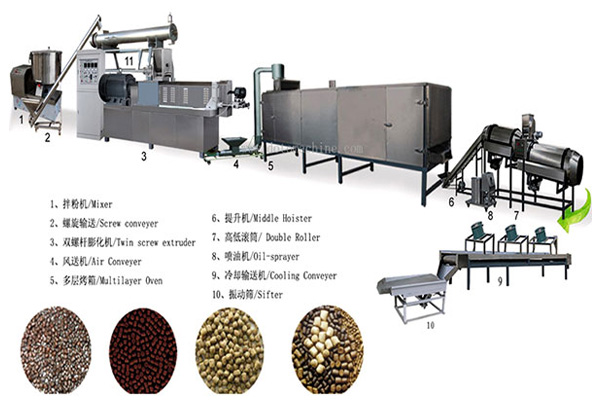
In a fish feed production line, the typical extrusion process involves sending crushed and mixed materials to a tempering device to achieve a certain moisture and temperature. The tempered mixture is then fed into an expansion chamber, where it is pushed through different zones by a high-speed rotating screw. Due to friction, the temperature and pressure of the material gradually increase, and pressure control locks between zones further regulate the pressure. The expansion temperature and pressure reach their maximum in the conical screw source at the head of the extruder. The material temperature rises to 135–160°C, with a pressure of 15–40 atmospheres. Although the water temperature exceeds 100°C, the pressure is much higher than atmospheric pressure, preventing boiling. When the material passes through the ring die holes and enters an atmospheric pressure environment, the pressure suddenly drops, steam rapidly escapes, causing the material to expand violently.
Currently, the more advanced wet extrusion process is considered particularly suitable for processing plant proteins, starches, and grain products widely used in animal feed. The HTST extrusion process can effectively destroy growth inhibitors in raw materials, kill harmful microorganisms, and has a greater impact on the nutritional components of raw materials, making it superior to other processes.