Processing principle of food puffing machinery and how to maintain it
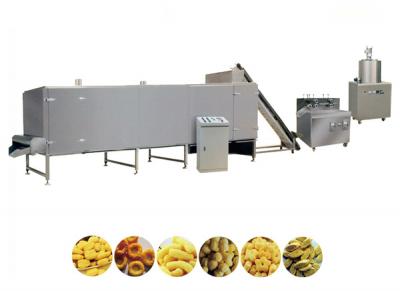
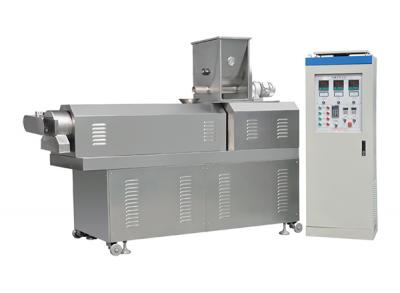
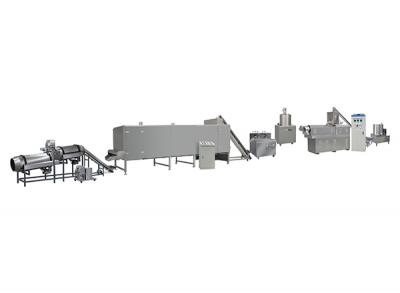
The food puffing machine is compact in size, low in price, quiet in operation, lightweight, exquisitely structured, and simple to operate. Utilizing the extrusion and propulsion of the non-standard unequal-pitch screw system of the twin-screw puffing machine, the material is rapidly filled while the gas inside is expelled. The material undergoes shear forces, causing backflow, which increases the pressure within the chamber. Through the friction between the screw and the chamber, the material is thoroughly mixed, extruded, heated, bonded, gelatinized, and undergoes structural changes.
The twin-screw puffing machine converts the friction of the material inside the barrel into thermal energy, causing the material to become a flowable gelatinous state. According to food puffing machine manufacturers, when the material is extruded to the outlet, the pressure instantly changes from high to normal. The original structure is disrupted, and the temperature instantly drops from high to normal, forming countless microporous structures inside. This causes moisture to rapidly evaporate from the structural organization, and then through the cutting device, cutting and cooling result in puffing and shaping.
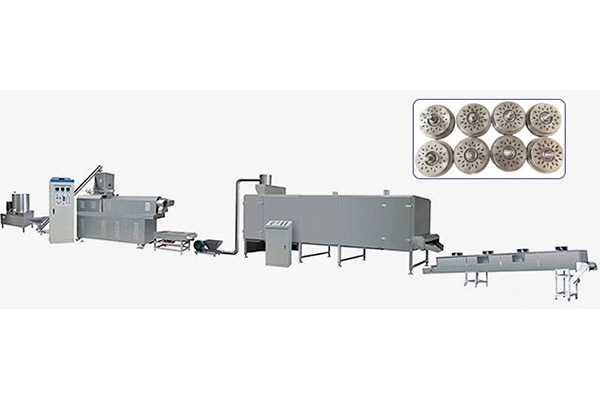
This is the maintenance and care of expanded food machinery:
1. The raw materials for puffed food should be cleaned to prevent metal or other foreign objects from entering the machine and damaging its parts. 2. During operation, do not disassemble the screw or place heavy objects or hard items on the extrusion chamber. 3. Keep the area around the equipment clean. When the machine is not in use for a long time or when changing the extrusion material, thoroughly clean the material inside the extrusion chamber to prevent clumping, mold, or cross-contamination between materials.
4. Lubricating grease should be added to the box bearings in a timely manner. After 500 hours of operation, the lubricating grease should be completely replaced (an appropriate amount of grease should be added before the new machine runs, and the oil should be changed after 200 hours of operation). 5. Since the wear parts near the discharge port wear out relatively quickly, while those near the feed port wear less, when replacing wear parts, they should be replaced sequentially starting from the discharge end, and it is not advisable to replace multiple parts at once.