Self-heating rice processing equipment
Self-heating rice (artificial rice production line) heating pack ingredients: A multi-purpose self-heating bag. This invention of a multi-purpose self-heating bag mainly uses calcined diatomaceous earth, iron powder, aluminum powder, coke powder, activated carbon, and salt to form a bag. After kneading, it can heat up to 60°C, suitable for winter heating and medical hot compresses. Adding quicklime, sodium carbonate, and water can raise the temperature to 120°C for heating meals or cooking food. The temperature remains high for 20 minutes, dropping to 100°C, and then to 60°C after 60 minutes. The material used for winter heating and hot compresses can be reused. After use, it can still be mixed with quicklime and sodium carbonate, then water is added to raise the temperature for heating food.
The main market segments include: ① Out-of-home dining market: dining during travel, business trips, and transportation such as trains, cars, planes, and ships; ② Workplace meal market: white-collar workers who do not return home for lunch; ③ Student meal market: supplementary meals for primary, secondary, and university students; ④ Family market; ⑤ Online consumers; ⑥ Special group consumption such as the military and oil fields.
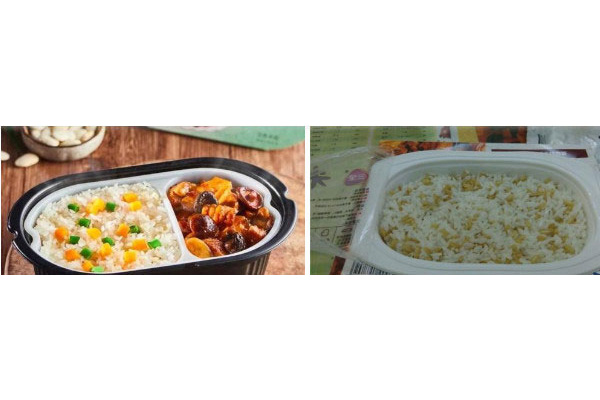
The material of the lunch box is made of PP five-layer composite film, which has fast heat conduction, low oxygen permeability, and high freshness preservation. Oxygen permeability refers to the degree to which oxygen passes through the protective layer. Oxygen permeability affects the level of freshness preservation. It is understood that PP five-layer composite film is a food-grade plastic, non-toxic and pollution-free, with one layer being a composite vacuum barrier to ensure good food preservation.
The heating method of the self-heating lunch box (artificial rice production line) is characterized by the reaction of calcium oxide (quicklime) with water to generate calcium hydroxide and release heat, followed by the reaction of hydrochloric acid with calcium hydroxide to release heat for heating the food. The reactive substances may vary, but all rely on chemical reactions to release heat. This technology has the advantages of rapid and sustained heating and low production costs.