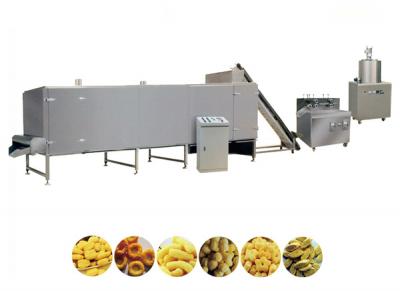
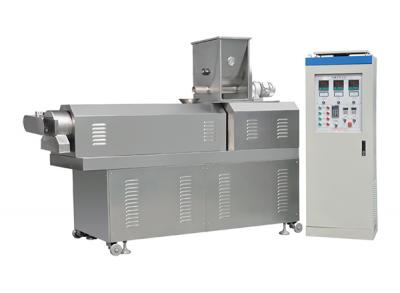
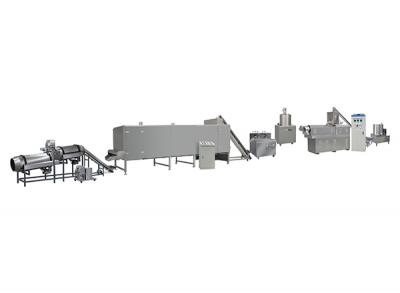
This is how a twin-screw extruder works.
The twin-screw extruder is a multi-screw extruder developed based on the single-screw extruder.
According to the relative positions of the screws, they can be divided into intermeshing and non-intermeshing types. The intermeshing type can be further divided into partially intermeshing and fully intermeshing types. Based on the rotation direction of the screws, they can be classified into co-rotating and counter-rotating types. Counter-rotating types can be further divided into internal and external types. The pressure zone characteristics of co-rotating twin screws differ. The material in the barrel cavity is subjected to the rotation of the screws, generating high-pressure and low-pressure zones. Clearly, the material flows from the high-pressure zone to the low-pressure zone in two directions: one is that the square screw rotating with the screw experiences reduced wear, thereby undergoing aging under high temperature and high pressure through conveying, shearing, mixing, and barrel shell heating, and is then extruded out of the barrel.
A counter-rotating twin-screw extruder generally uses two screws of identical size but with opposite thread directions. The difference between inward and outward rotation lies in the pressure zones; the pressure generated by inward rotation of the twin screws varies between high and low. When the material passes through the twin screws, it creates high pressure at the inlet, causing feeding difficulties. However, the C-shaped material flow formed inside the screws cannot transfer from one screw to the other, significantly reducing material mixing, and its self-cleaning capability is not sufficiently effective or stable. The twin-screw extruder offers advantages such as strong adaptability, slip conveying, and self-cleaning, but its complex structure, high investment costs, and correspondingly high maintenance and operating costs are drawbacks. Therefore, twin-screw extruders are generally used to produce high-value aquatic and pet feed products, such as feed for eels, turtles, and juvenile fish, because the market prices of these products are sufficient to offset the manufacturing costs of twin-screw technology. Other special types of aquatic feed, such as pellet feed (0.8 to 1.5 mm in diameter), high-fat aquatic production, and small but often variable-volume feed, require the use of twin-screw extruders for production.
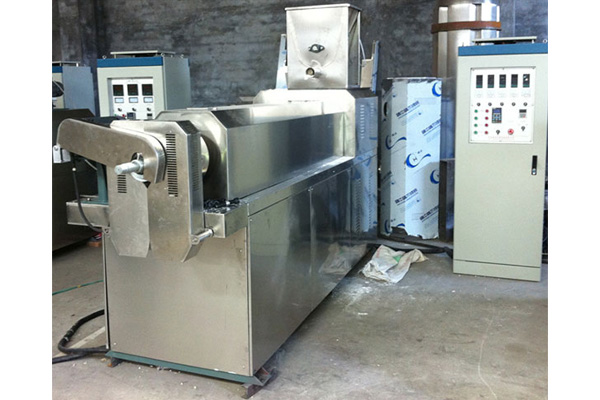
The development of twin-screw extruders in China has been relatively late. Zhangqiu Haiyuan Machinery mainly produces single-screw and twin-screw extruders, continuously improving them for over 30 years, with very mature production processes and technologies. For medium-sized twin-screw extruders, due to significant variations in raw material characteristics, the screw speed needs to be adjusted over a wide range. Because its working principle differs from that of single-screw extruders, there are substantial differences in specific structures, especially the more complex screw arrangement, as well as significant differences in the barrel and other components.
Thrust bearings and gearboxes lead to an increase in equipment costs. Two C-shaped materials flow along the inner wall of the sleeve, forming the main flow of the material; another type forms a reverse flow through the gaps in the screw engagement parts. The reason for the reverse flow is that the left screw pulls the material into the engagement gap, while the right screw pulls the material out of the gap, causing the material to move forward in an '∞' shape and changing the direction of material flow. This not only aids in the mixing and homogenization of the material but also generates grinding (i.e., shear) between the screw grooves, producing a rolling effect that is far less than the calendering effect of the reverse screw.
As the main machinery in the puffed food equipment production line, the twin-screw extruder has always played a key role. During use, it must be strictly operated according to operational requirements and undergo daily maintenance to extend its service life.