Application of puffing machinery and equipment
As people's understanding and research of extrusion technology continue to deepen, the application fields of extrusion technology are expanding, and the market demand for high-efficiency and energy-saving puffing machinery is also increasing.
In the food industry, the widespread application is the production of convenience foods, such as staple foods, breakfast foods, and infant foods. Before 2010, convenience foods and equipment were the focus of China's food industry development. Convenience foods, especially various snacks, are favored by consumers, particularly young people, and have a very broad market. Therefore, developing extrusion technology and equipment, accelerating the application of extrusion technology in food production, and promoting the development of China's food industry are topics that engineering and technical personnel should consider.
In the feed industry, raw materials processed through extrusion technology are more hygienic, safe, easily digestible, and have higher palatability, promoting animal feeding and significantly improving feed efficiency. This has played a positive role in advancing the development of China's aquaculture and livestock industries.
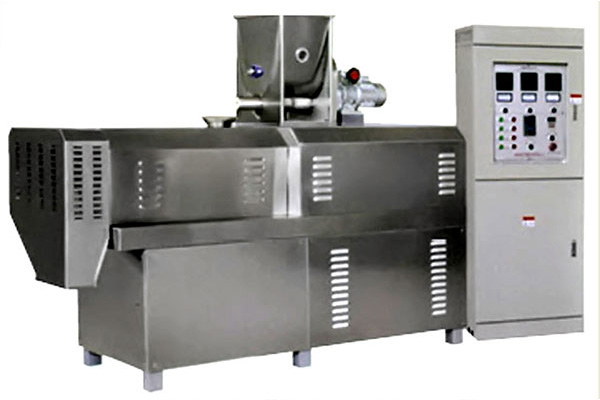
In the fermentation industry, raw soybeans treated with extrusion puffing technology for brewing soy sauce achieve a protein utilization rate of up to 90%, improving the yield and quality of soy sauce and enhancing its flavor. Extruded raw materials used in making wine, soy milk, and other products have greatly improved product quality [1].
In the petroleum industry, using extrusion technology to process raw materials can rupture the oil cell walls, fully exposing the oil to a free state, improving percolation adaptability, and enhancing the capacity of the extractor. Due to good extractability, the wet meal contains a smaller dosage [3]. Oil extrusion technology provides a new approach for the renovation and expansion of oil extraction plants.
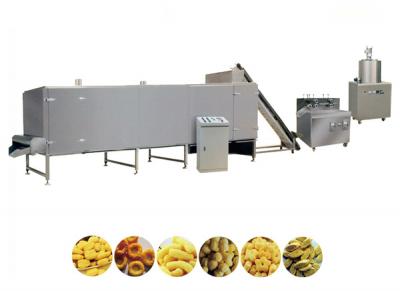
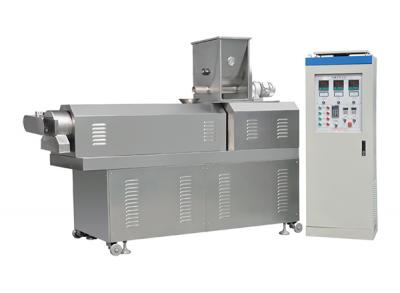
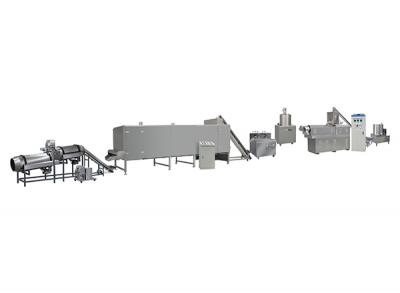
Currently, the manufacturing devices are mainly single-screw extruders and twin-screw extruders. Since the materials generally have high moisture resistance, high oil content, are amorphous, non-uniform, and classified into multiple types, extrusion processing with a single-screw extruder may have certain mechanical issues, making twin-screw extruders more preferable. In twin-screw extruders, the material will not undergo co-rotation, and material leakage along the gaps is less likely to occur, especially for high-moisture, high-fat materials, reducing countercurrent and leakage flow. However, the twin-screw extruder has a complex internal structure, and the barrel cover material makes it difficult to understand the mechanism of flow changes and residence time distribution. Meanwhile, due to the different properties of material formulations, many problems remain to be solved, such as precise detection methods and equipment parameters, establishing theoretical models adaptable to various aspects of actual production, including temperature, pressure, productivity characteristics, control models, and energy consumption parameters compared to the residence time distribution of twin-screw extruder mixing. Research on twin-screw extrusion machinery is based on material properties and requires the collaborative efforts of personnel in mechanics, food science, chemical engineering, thermal engineering, fluid mechanics, automatic control technology, and other fields. Under the premise of meeting mechanical, thermal, and rheological conditions, parameters can be developed for digital display, automatic adjustment, and good stability of the extruder.