The role of extruded feed
Advantages of extruded feed
Improving feed utilization rate: The heat, moisture, pressure, and various mechanical actions during the extrusion process break the 1,4-glycosidic bonds in starch molecules, generating low-molecular-weight products such as glucose, maltose, maltotriose, and maltodextrin. Extrusion processing can increase the degree of starch gelatinization, partially destroy and soften the cell walls of the fiber structure, release some encapsulated and bound digestible substances, and at the same time, fat penetrates from the inside of the particles to the surface, giving the feed a special aroma and improving palatability, thereby increasing the feed intake rate.
Additionally, moderate heat treatment of protein in plant-based protein feed can inactivate certain protease inhibitors such as trypsin inhibitors and urease, and disrupt hydrogen bonds and other secondary bonds in proteins, causing changes in the original spatial conformation of polypeptide chains, leading to protein denaturation. Denatured protein molecules become fibrous, with extended and loose peptide chains, increased molecular surface area, and hindered flow, which enhances contact with enzymes in animals, thereby facilitating digestion and absorption in aquatic animals and improving the digestibility and utilization of nutrients by 10% to 35%.
The role of extruded feed
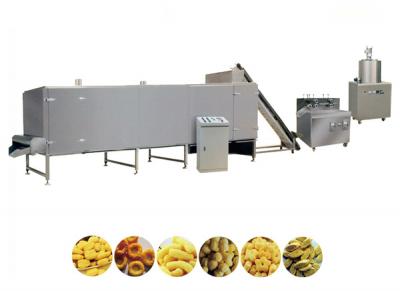
Reducing environmental pollution, extruded floating fish feed has good stability in water. The feed pellets produced through extrusion and puffing rely on the gelatinization of starch and the texturization of proteins within the feed to achieve a certain degree of adhesion or binding force. Their stability generally lasts over 12 hours and can extend up to 36 hours, thereby reducing the loss of nutrients through dissolution and sedimentation in water. Data shows that using extruded floating fish feed can save 5% to 10% compared to powdered or pellet feed, and it can prevent feed residues in water, reducing water pollution.
Reducing the occurrence of diseases. Feed raw materials often contain harmful microorganisms, such as aerobic bacteria, neutrophilic bacteria, Escherichia coli, molds, Salmonella, etc., with relatively higher levels found in animal-derived feed ingredients. The high temperature, high humidity, and high pressure of the extrusion process can kill the vast majority of these harmful microorganisms. According to data, the number of Escherichia coli in raw materials can reach 10,000 per gram, but after extrusion, it drops to fewer than 10. Salmonella can be essentially eliminated after extrusion at temperatures above 85°C, which helps maintain water quality and reduce adverse environmental factors in aquaculture. At the same time, this achieves a moisture content of 8% to 10%, better improving the storage stability of the feed.
The management of feeding is convenient; aquatic extruded feed can float on the water surface (in water) for a long time, so there is no need to set up a special feeding platform—just feed at fixed points. When fish feed, they need to surface, allowing direct observation of their eating behavior, timely adjustment of feeding amounts, and prompt understanding of fish growth and health conditions. Therefore, using aquatic extruded feed facilitates scientific feeding management, saving a significant amount of time while improving labor productivity.
Extruded feed can meet the feeding habits of different animals and, based on processing techniques, can be divided into three types: floating, slow-sinking, and fast-sinking. Currently, about 80% of fish feed is sinking feed, such as for shrimp, chum salmon, salmon, and yellowtail tuna, which prefer sinking feed, while catfish, tilapia, eels, and most fish larvae prefer floating feed. Catfish and tilapia have equal preference for both sinking and floating feed. Additionally, extruded feed can meet special requirements, such as low-moisture feed and high-fiber feed.
The loss of vitamins: temperature, pressure, friction, and moisture can all lead to vitamin loss. American scholars reported that in extruded feed, the losses of VA, VD, and folic acid are 11%, the loss rates of thiamine mononitrate and thiamine hydrochloride are 11% and 17% respectively, and the loss rates of VK and VC are 50%, while in hard pellet feed, the losses are halved. Leng Yongzhi et al. fed carp with extruded feed under conditions completely devoid of natural food, and a few individuals in the fish group exhibited gill bleeding, which is suspected to be related to the destruction of heat-sensitive vitamins during the feed processing.
The loss of enzyme activity in enzyme preparations: the optimal temperature for enzymes is 35-40°C, with a maximum not exceeding 50°C. However, during the extrusion and pelleting process, the temperature reaches 120-150°C, accompanied by high humidity (causing higher water activity in the feed) and high pressure (altering the three-dimensional spatial structure of enzyme proteins, leading to denaturation). Under such conditions, the activity of most enzyme preparations is almost completely lost. According to Coman, the survival rate of untreated glucanase after pelleting at 70°C is only 10%; after treatment, the survival rate of glucanase is 64% when conditioned at 75°C for 30 seconds, but after further pelleting at 90°C, the survival rate drops to only 19%. The activity of phytase decreases by more than 50% after pelleting at 70-90°C.
Loss of microbial agents: Currently, the microbial agents commonly used in feed mainly include Lactobacillus, Streptococcus, yeast, and Bacillus. These microbial agents are particularly sensitive to temperature. When the extrusion pelleting temperature exceeds 85°C, their activity will be completely lost.
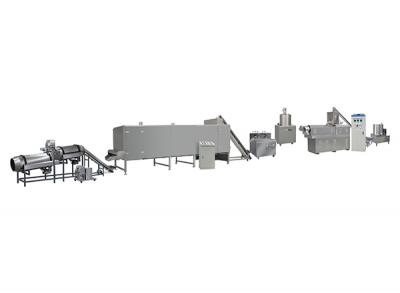
Loss of Protein and Amino Acids: The high temperature during the extrusion process causes some reducing sugars in the raw materials to undergo the Maillard reaction with free amino acids, reducing the utilization rate of some proteins. Additionally, under alkaline conditions, high temperatures can cause proteins to form lysinoalanine. Excessive heating, especially at high pH levels, can lead to the racemization of some amino acids, producing D-type amino acids, all of which significantly reduce protein digestibility. The amino acid most susceptible to heat loss is lysine, followed by arginine and histidine. Using in vitro methods, Wang Lin et al. measured the enzymatic hydrolysis kinetics of seven feed ingredients before and after extrusion in the intestines of grass carp, and Luo Li conducted similar studies on allogynogenetic silver crucian carp. The results showed that extrusion affects the enzymatic hydrolysis rate of proteins in feed ingredients. The enzymatic hydrolysis rate of soybean meal, fish meal, and meat and bone meal decreased after extrusion, while that of rapeseed meal, wheat middlings, and corn increased, with corn showing the most significant change. The enzymatic hydrolysis rate of cottonseed meal did not change significantly before and after extrusion. Zhou Xinghua et al. used a similar approach to study the in vitro digestibility of crude protein in extruded and non-extruded feed ingredients for Schizothorax prenanti. They found that extrusion had a positive effect on feed ingredients with low protein and high starch content but had a negative effect on those with high protein content (except for feather meal). Therefore, it is not advisable to use extruded soybean meal, fish meal, or meat and bone meal in compound fish feed. The Tu Yingchuan system can simultaneously spray up to four types of liquid or colloidal additives onto processed feed, with a spraying dosage of 0.1–5 kg per ton of feed.
However, the post-added components tend to concentrate on the particle surface and are easily affected by external factors such as packaging, transportation, temperature, light, oxygen, and humidity, leading to faster loss of these components during storage compared to those in ordinary feed. Therefore, the liquid used for post-addition is crucial. When selecting the liquid, in addition to ensuring that the post-added components can be uniformly and stably dispersed, it is also necessary to consider its adhesion to feed pellets and its susceptibility to environmental factors. Additionally, methods such as encapsulation, derivatization, and carrier adsorption are also used for pretreatment of heat-sensitive substances to improve their thermal stability. If drugs and other substances are added post-processing, it can also reduce cross-contamination and improve product quality. Tmuw Limited in the UK coats powder onto pellet feed using a syrup, which not only reduces dust pollution from pellet feed but also improves feed palatability by masking the taste of drugs with the syrup.
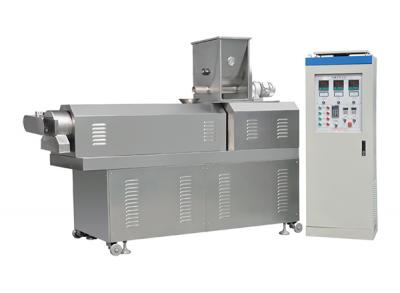
To produce high-fat extruded feed using the post-addition oil technique, either the post-extrusion fat spraying method or a twin-screw extruder can be selected as the processing equipment. Fat spraying requires the material temperature to be between 30-38°C, which allows the oil to be evenly dispersed in the feed, increasing its energy content, while also making the pellet surface smoother and more uniform, greatly improving the appearance. The source of the oil also affects the degree of expansion differently; the oil naturally present in the feed ingredients has a smaller impact on expansion than added pure oil. Therefore, selecting raw materials with high oil content to increase the feed's oil level is more conducive to the production of extruded feed.
Improvement ideas for extruded feed: In response to the current problems with extruded feed, some have proposed improving feed quality by altering the feed processing technology. However, this method results in high mechanical wear, unstable operation, low output, and high cost. From the above analysis, it can be seen that extrusion technology can significantly improve the digestibility and utilization of feed ingredients high in starch, such as wheat middlings and corn, while generally reducing the digestibility and utilization of soybean meal and fish meal. Its positive effects, such as destroying anti-nutritional factors, can also be achieved through hard pellet feed processing technology.
Therefore, it is entirely conceivable to combine puffing technology with hard pellet feed processing technology, puffing only the raw materials suitable for puffing, such as secondary flour and corn, which can also be purchased, and then mixing them with raw materials unsuitable for puffing, processing them with a hard pellet feed processing unit. In this way, it is possible to maximize strengths and minimize weaknesses, fully utilize feed efficiency, and significantly reduce feed processing costs. This method is worth studying.