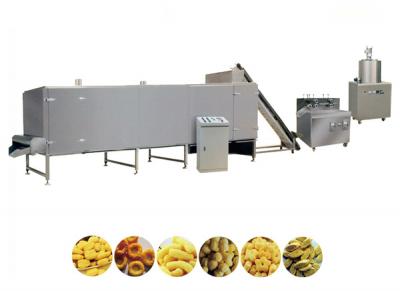
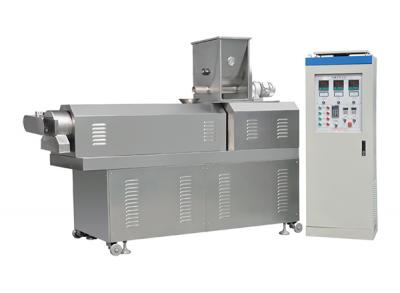
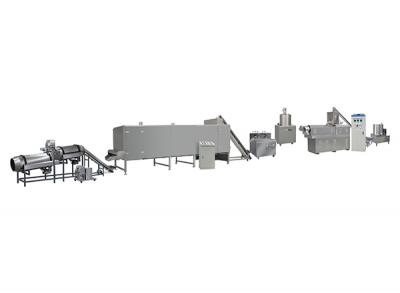
Development of Floating Fish Feed Processing Equipment
The synchronous development of aquaculture and modern mechanized equipment is a systematic project. This article mainly introduces the modernization direction of fish farming machinery and fish feed processing equipment.
1. Mechanical equipment for fish farming
In recent years, mechanized fish farming has developed rapidly worldwide, transitioning from traditional fish farming to modernization. Practice has shown that mechanization and modernization of fish farming have significant effects on increasing production and income. From the perspective of global aquaculture today, agricultural fish farming, pastoral fish farming, and industrial fish farming have formed a computer-based structure. Agricultural and pastoral fish farming have widely adopted industrially produced fry and broodstock. Only by integrating these three can a complete aquaculture system be formed.
1. Agricultural mechanized fish farming equipment Agricultural mechanized fish farming includes intensive and semi-intensive fish farming in ponds, rivers, lakes, reservoirs, and tidal flat aquaculture. Traditional pond fish farming has a history of over 3,000 years in China. In the 1960s, the yield per mu was about 400 kilograms. After the 1980s, with the successful development of supporting mechanized equipment for pond fish farming, pond fish farming entered the era of mechanized fish farming, and the yield increased exponentially. The equipment is mainly used for pond excavation, irrigation and drainage, aeration, sediment removal, fertilization, water quality improvement, fish disease prevention and control, feed processing, and overwintering.
2. Mechanized Equipment for Marine Ranching Marine ranching includes artificial release, resource enhancement, raft culture, natural conservation, enclosure culture, induced culture, artificial reefs, and ecological aquaculture. Modern mechanized equipment for marine ranching mainly includes: seedling breeding facilities, cage culture equipment, artificial reefs, underwater tidal flat cultivation and harvesting machinery, mobile cages and aquaculture vessels, underwater detection and monitoring, marine aquaculture platforms, aquaculture feeding and aeration vessels, physical and chemical enclosure equipment, rope and net manufacturing machinery, and enclosure construction machinery.
3. Industrialized fish farming machinery and equipment Industrialized fish farming adopts industrial production models, including warm-water flow-through fish farming, cold-water flow-through fish farming, fish farming using waste heat from power plants, mechanized high-density fish farming, factory-based fully enclosed recirculating aquaculture systems, aquaponics systems, and mobile fish farming factories. Modern industrialized fish farming mainly includes: drainage systems, computers and aquaponics systems, aeration systems, water quality monitoring systems, water disinfection systems, interactive feedback feeding systems, computer management and international networking systems, temperature control systems, sewage discharge and computer-based sewage management systems, and power distribution systems.
Currently, the development of aquaculture regions in China is still unbalanced, with most areas primarily relying on traditional agricultural farming methods. In the future, rapid development will require industrialized fish farming as the direction of progress.
2. Fish Feed Processing Equipment
Currently, the main fish feed processing equipment in the world includes:
1. Pellet Feed Conditioning Equipment: To prevent pellet feed from disintegrating immediately in water, a steam conditioning device is generally added to the hard pellet feed machine to enhance the binding properties of the feed.
2. Extruded Feed Processing Equipment: To develop new feed sources, this equipment is used to extrude pig hair, feathers, and livestock and poultry manure into feed, remove toxins such as gossypol from cottonseed, and process extruded soybean meal, rapeseed cake, and cottonseed cake.
3. Pellet Feed Coating Equipment: To extend the stability time of pellet feed in water, an oil spray coating device is generally added at the outlet of the pellet feed machine. However, due to the high moisture content of the pellets at that time, with the finished product moisture exceeding 16%, it is advisable to dry them first before coating.
4. Fresh soft pellet feed processing complete equipment: Fresh live feed is mashed into a paste using a pulper, mixed with other powdered feeds, and processed into fresh soft pellet feed to preserve the active substances of the live bait.
5. One-step pellet feed processing complete equipment: During processing, this equipment does not require adding steam to the feed, operating on a dry-in-dry-out basis. When the raw material moisture content is below 12%, the product moisture content is less than 10.2%, eliminating the need for drying.
6. Sink-then-float pellet feed processing complete equipment: Its product is the UN-recommended shrimp pellet feed, which does not disintegrate when submerged in water and can float to the surface after several hours, reducing water pollution and saving feed.
7. Normal temperature and pressure floating pellet feed processing equipment This equipment does not require heating facilities. The pellet feed processed under normal temperature and pressure can also 'float immediately' and remain buoyant for several hours without disintegrating.
8. Ultrafine grinding processing complete set of equipment To make feed easier to digest and absorb, ultrafine grinding technology is generally used. It is suitable for feeding larger seedlings and can also serve as raw material for pellet feed.
9. Microencapsulated feed processing complete set of equipment It allows micro-pellets to be naturally coated externally, then formed by spray drying. The feed pellet diameter is 5 to 10 micrometers, reaching 800,000 pellets per milligram.
Fish and shrimp feed processing machinery has gradually separated from livestock and poultry feed processing machinery abroad, forming its own system. Only when aquaculture is fully mechanized and modernized can its output and quality be significantly improved.