Working principle of food extruder: a comprehensive guide to the puffing process
In today's world of abundant snack foods, crispy and fluffy treats like potato chips, rice crackers, and shrimp crackers are widely loved by the public. The creation of these foods relies on the 'magical' work of food puffing machines. As an essential piece of equipment in the food processing industry, the working principle of the food puffing machine involves sophisticated physical and chemical knowledge, giving ingredients a new texture and form through a unique process.
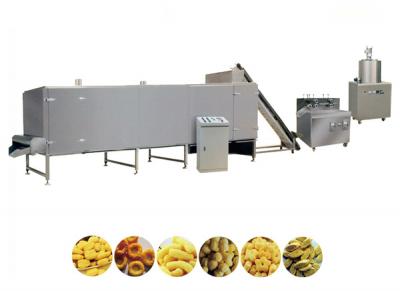
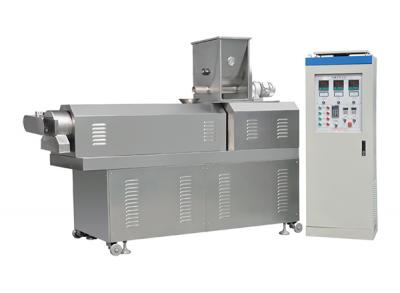
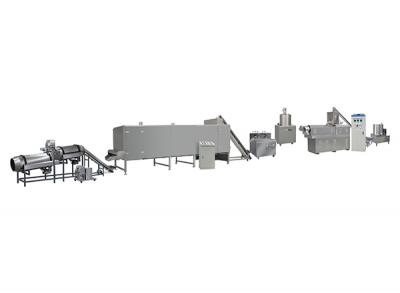
The food extruder is mainly composed of a feeding system, a screw extrusion system, a heating system, a forming system, and a cutting system. The feeding system is responsible for conveying the materials to be processed, such as corn, rice, and beans, into the extruder, ensuring that the materials enter the subsequent processing stages evenly and stably. The screw extrusion system is the core of the extruder, consisting of a screw and a barrel. The screw rotates inside the barrel, acting like a "powerful mixer," pushing the materials forward while simultaneously compressing, stirring, and shearing them.
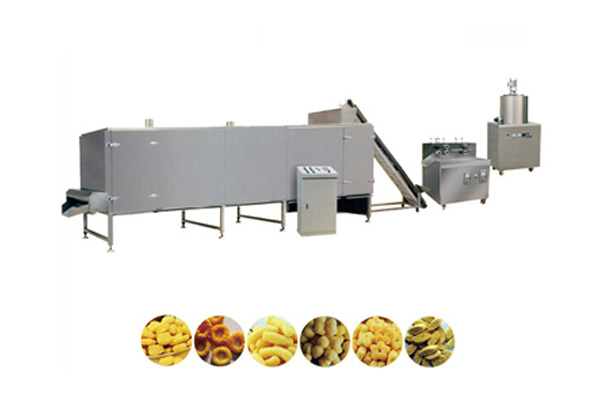
When the material enters the extruder, it first begins to move forward under the action of the screw. As the screw pitch gradually decreases, the spatial constraints on the material become greater, and the pressure continuously increases. Meanwhile, friction between the screw and the material, as well as between the material and the inner wall of the barrel, generates a large amount of heat. Additionally, the heating system heats the barrel, further raising the temperature of the material. Under the combined effects of pressure and temperature, the moisture inside the material is rapidly heated above its boiling point, forming superheated steam. At this point, the material is like an energy body 'ready to burst,' filled with high-pressure steam inside, but due to the constraints of the external high-pressure environment, the steam cannot escape for the time being.
When the material is conveyed to the outlet die of the extruder, a dramatic transformation occurs. The outlet die has a small aperture, and the external environment is at normal pressure. The material instantly transitions from a high-pressure state to a low-pressure state, creating a huge pressure difference. This pressure difference acts like a 'release valve,' causing the superheated steam inside the material to expand rapidly, increasing in volume by tens or even hundreds of times. The rapid expansion of steam generates a powerful impact force, which pries open and tears apart the material's structure. The originally dense material organization is disrupted, becoming loose and porous, thus completing the extrusion process.
After puffing, the material must undergo shaping and cutting processes. The shaping system, based on different mold shapes, extrudes the puffed material into various specific forms, such as flakes, strips, and balls, to meet the needs of different foods. The cutting system, according to the set length, cuts the continuous puffed material into small segments, making them into individual products.
Different types of food puffing machines, such as air puffing machines and extrusion puffing machines, have some differences in their specific working processes, but the overall principle is based on the material storing energy under high temperature and high pressure, and then releasing energy through instantaneous pressure reduction to achieve puffing. For example, an air puffing machine mainly relies on high-temperature, high-speed hot air to heat and puff the material. Compared with an extrusion puffing machine, its mechanical extrusion effect during the working process is weaker.
The food puffing machine transforms ordinary ingredients into puffed foods with rich textures and diverse shapes through ingenious mechanical design and physicochemical principles. A deep understanding of its working principle not only amazes us with the sophistication of modern food processing technology but also provides an important theoretical foundation for food research and production, driving continuous innovation and development in the food industry.