The manufacturer of puffing machinery tells you: Tips about twin-screw extruders
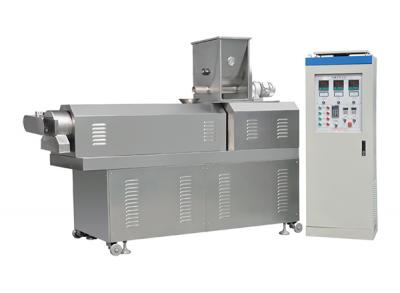
The manufacturer of puffing machinery tells you: The twin-screw extruder is a type of multi-screw extruder, developed from the single-screw extruder. In the barrel of the twin-screw extruder, two screws are arranged side by side, hence the name twin-screw extruder.
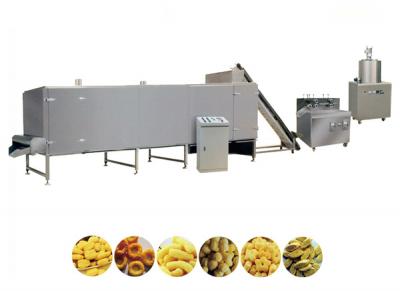
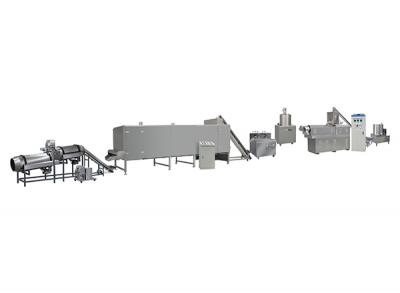
The twin-screw extruder consists of several parts, including the feeding system, extrusion system, heating system, transmission system, rotary cutting system, and control system. The material is fed by the feeder, and the barrel undergoes high temperature, high pressure, and high shear to puff the material, achieving the desired tissue state and quality requirements.
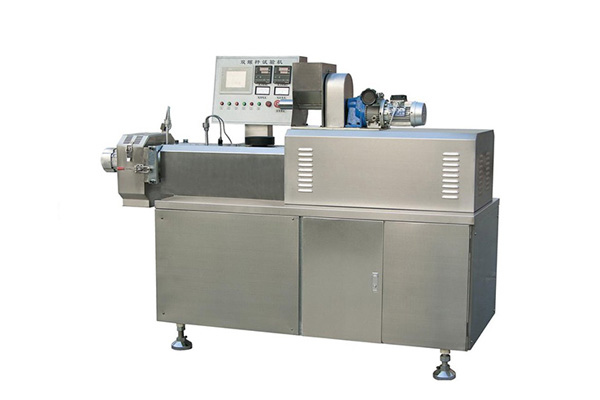
Main features of the twin-screw extruder:
1. The main engine adopts advanced frequency converter speed control technology, making the equipment powerful, more stable in operation, and more energy-efficient.
2. The screw is made of alloy steel with nitriding treatment, ensuring a longer service life. Some equipment adopts a modular combination structure, which can be freely combined according to different needs. 3. A fully automatic temperature control system is provided to make temperature control more intuitive and parameters more precise. 4. A lubrication system is designed to ensure a longer lifespan for the transmission parts of the equipment. 5. The screw has a self-cleaning function, eliminating the need to disassemble and clean the screw when stopping.
6. Different screws and length-to-diameter ratios can meet various production processes.
The twin-screw extruder has a wide range of raw material adaptability, diverse product shapes, and flexible configuration. Different models and configurations can be selected to produce various products. Currently, the main applications of the twin-screw extruder include: first, producing various snack foods using corn and potatoes as raw materials; second, producing various imitation foods using flour as raw material; third, producing textured protein foods (commonly known as artificial meat) using plant protein as raw material; fourth, using grains, legumes, or potatoes as raw materials to produce staple foods after extrusion. Additionally, other products can be produced depending on different equipment combinations.