The mechanical principle of puffed food
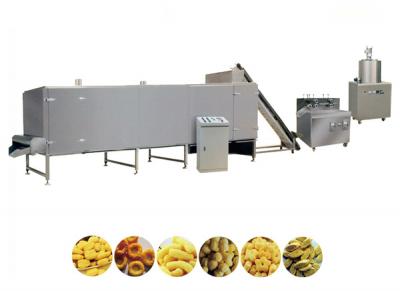
When it comes to puffed food machinery, one must first understand puffed food and know what the function and principle of puffed food machinery are.
Specifically, puffed food is made from grains, beans, potatoes, vegetables, and other raw materials, processed through puffing equipment to produce a wide variety of foods with exquisite shapes, rich nutrition, and crispy, fragrant, and delicious qualities. Therefore, it is a unique form of a large category of food.
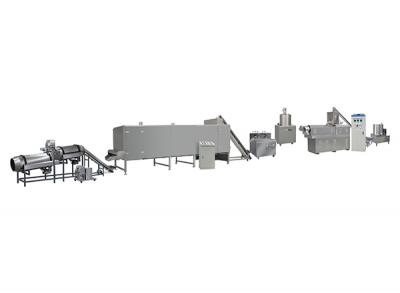
Due to the simple structural design of the equipment system for producing this puffed food machinery, ease of operation, low equipment investment, and quick returns, we have developed very rapidly. Puffed food is an essential snack in people's daily lives, so the application of puffed food machinery is becoming increasingly widespread. To help everyone understand puffed food machinery, here is an introduction to the basic working principles of puffed food machinery:
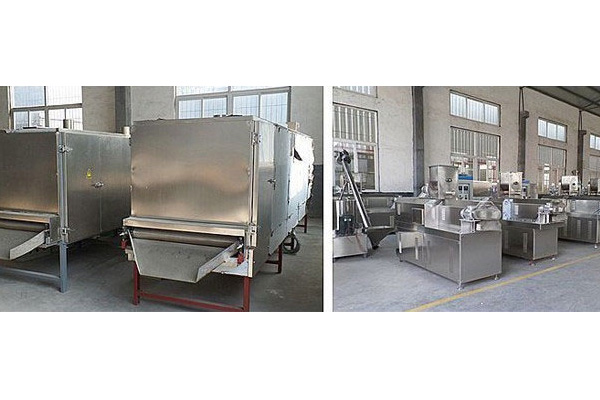
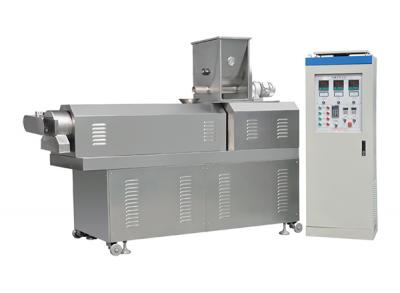
First, the working principle of puffed food machinery is relatively simple. The puffing machine uses mechanical energy to provide kinetic energy.
Second, when the material in the puffing food machinery is extruded to the outlet, the pressure instantly changes from high to normal pressure, and the temperature instantly changes from high to normal temperature, causing moisture to rapidly evaporate from the tissue structure. As the friction between the screw and the barrel fully mixes, extrudes, heats, bonds, and gelatinizes the material, structural changes occur, and the original structure is disrupted, forming countless microporous structures inside. Then, through the cutting device, cutting and cooling, the puffed food takes shape.
Third, the puffing food machinery utilizes the extrusion and propulsion of the non-equidistant non-standard screw system of the puffing machine. The gas in the material is expelled and quickly filled by the material. The material is subjected to shear force, causing backflow, which increases the pressure inside the machine chamber. Subsequently, mechanical energy is converted into thermal energy through the friction of the material within the chamber, turning the material into a gel-like state with fluid properties.