How does a food extruder make puffy snack foods
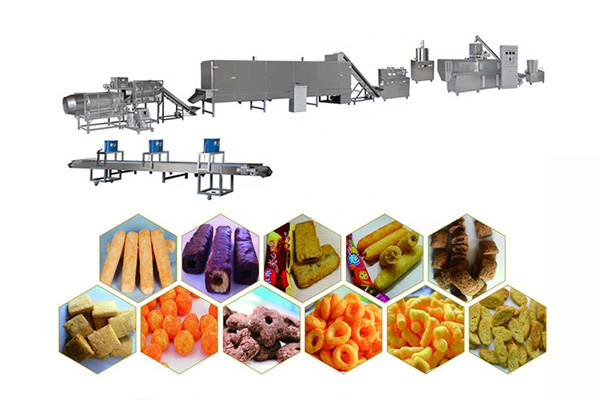
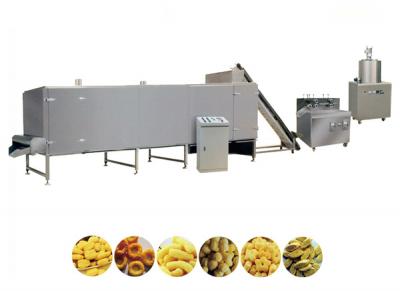
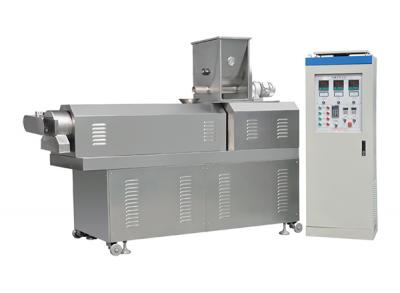
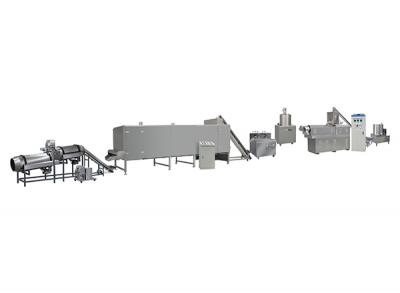
The food extruder consists of several parts, including the feeding system, extrusion system, heating system, transmission system, rotary cutting system, and control system. The material is fed into the machine by the feeder, and the barrel undergoes high temperature, high pressure, and high shear to puff the material, achieving the desired texture and quality requirements.
A food extruder is a technology that expands food through the combined effects of moisture, thermal energy, mechanical shear, and pressure, involving a high-temperature, high-pressure short-time processing. When raw materials containing a certain amount of moisture enter the barrel through the feeder, they are conveyed forward as the screw rotates. As the material gradually encounters resistance from the die head, it is compressed. Through the calendering effect, absorption of heat from the external barrel, and the high temperature and pressure generated by intense stirring, mixing, and shearing between the screw and the barrel, the material becomes molten in the extrusion chamber. The tightly arranged micelles in the starch structure are disrupted, and the starch transforms from raw starch (β-starch) to cooked starch (α-starch), resulting in starch gelatinization. At this stage, the moisture in the material remains in a liquid state. When the molten material enters the high-temperature and high-pressure zone before the forming die, it becomes completely fluid. As it is extruded through the die holes and reaches normal temperature and pressure, the volume of the colloidal starch in the material instantly expands, causing numerous micropores to burst inside the food. The volume rapidly expands, forming a porous and crispy expanded food product.