What are the stages of food processing with a food extruder?
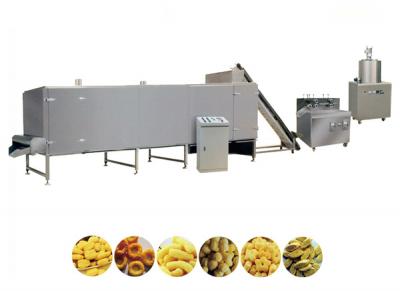
A food puffing machine is a small food processing device that uses flour, corn starch, potato starch, and other raw materials, which undergo kneading, curing, shaping, drying, frying, and puffing. By using different molds, it can produce novel and uniquely shaped products such as shells, spirals, square tubes, round tubes, lotus root slices, thorn snails, and large intestines. After frying and puffing, these become crispy, delicious, and flavorful foods. It is a popular snack among consumers in the current market. This production line is reasonably designed, highly automated, and features parameter control.
1. Mixing - Its function is to uniformly mix dry materials and then blend with water to achieve pre-wetting, providing some time for starch hydration. This process has a significant impact on puffing. Generally, the total moisture content required for puffed materials is 13-20%, which is completed by a powder mixer.
2. Conveying - The mixed materials are transported from the powder mixer to the feed hopper. Bucket elevators, screw conveyors, or vacuum conveying equipment are commonly used.
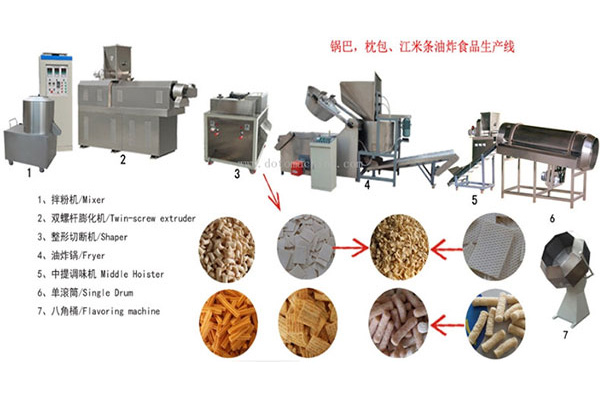
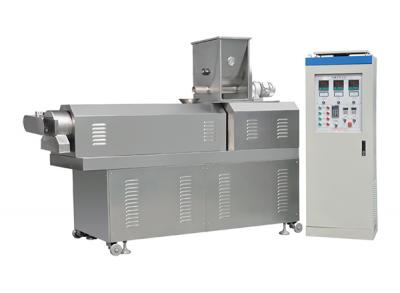
3. Extrusion - This is the key to puffed processing. The extruder cooks the material and, under a certain pressure, transforms it into a plastic melt. The cooked material is forced through small die holes under pressure to form a specific shape, then expands as it exits the die to create the puffed structure. Cutting equipment slices the continuous output into products of the desired size. The extruder's operating controls can be used to regulate the density and texture of the directly expanded product. The processing parameters that can be independently controlled are moisture content, feed rate, barrel temperature, and screw speed (if variable). Die resistance is also a parameter that can be independently controlled, but once the extruder is installed in the puffed food equipment, it will no longer change during the steady-state process.
4. Drying - The extruded and directly puffed food is generally dried after kneading. The moisture content of the puffing raw material is 13%-16%. After kneading, due to the water turning into steam and flashing off, it drops to 8%-12%. Then drying is carried out to reduce the moisture content to below 2%-5%, creating the environment required for a crispy texture and stable shelf life. Because the product has low density, the drying time is very short to achieve the desired effect.
5. Coating - The puffed and dried product is sprayed with oil and seasoning. Oil gives the product a better mouthfeel, while seasoning imparts different flavors. The coating of oil and seasoning generally accounts for about 20%-35% of the product's weight.
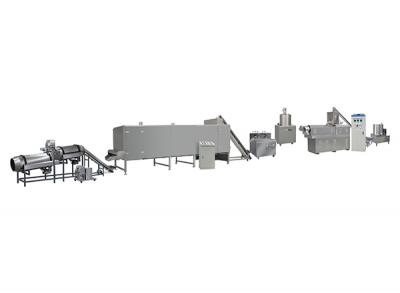
In general, the extrusion process of a food extruder consists of five processing stages: mixing → conveying → kneading → drying → coating.