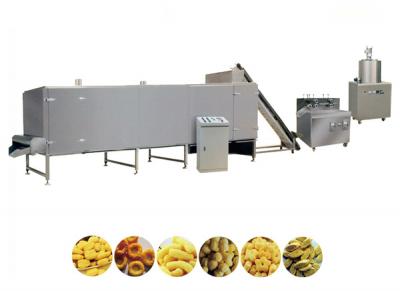
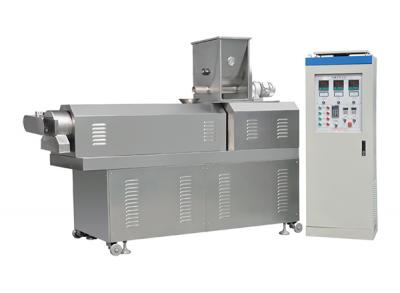
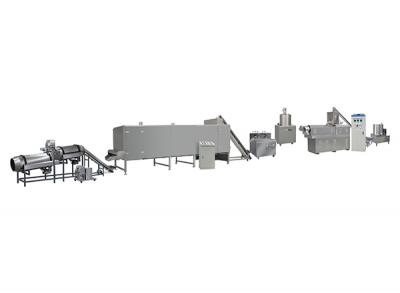
Feed extruder for extruding corn and other feeds
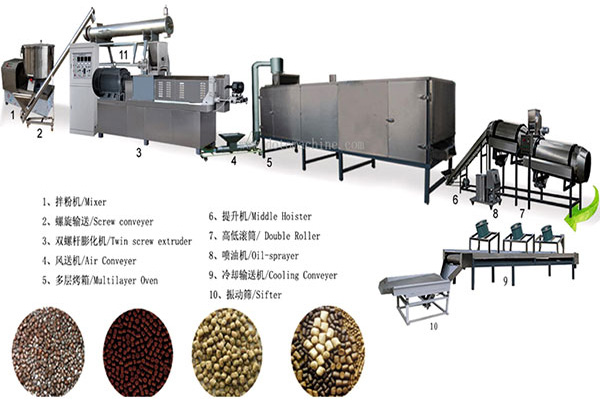
Application Analysis of Feed Extrusion Technology 2.1 Extruded Pig Feed In recent years, domestic extruded pig feed technology has also emerged, basically only producing piglet feed.It has been proven that using puffing technology to produce pig feed can reduce the emission of environmental pollutants during the feed factory production process, the pig fattening process, and the storage and transportation of manure.Figure 2 shows a typical pig feed production process.In actual production, we found that the use of expanded materials reduced the liquid fertilizer discharged from pigs.Feeding extruded materials reduces water consumption in pigs, and the special structure of extruded materials decreases the water content in wet feeding of animals (Table 2).It also shows that testing of expanded piglet feed can reduce the amount of urine and fertilizer excreted by pigs, thereby lowering the storage and transportation costs of fertilizer.Puffing can increase the digestibility of crude fiber.The accumulation of crude fiber slightly increases the nitrogen content in solid feces, but significantly reduces the nitrogen content in urine.When feeding inflated feed, urine and nitrogen decrease.
Therefore, as shown in Table 3, the amount of NH3 in pig farms, the environment, and the storage and transportation of liquid fertilizers are minimal. In terms of nutrition, each pig saves 21.4 yuan compared to fattening pigs (Table 4). Cost reduction is a comprehensive benefit, involving many aspects such as feed production, feed and fertilizer processing. The environmental impact of supplying extruded materials is more significant. The chemical oxygen demand (organic pollutants) released from livestock manure far exceeds the total discharge of industrial and domestic wastewater, and pollution from livestock and poultry is the main source of pollution in rural areas of China. Therefore, it is necessary to reduce pollution through the use of expansion technology. 2.2 Expansion of dairy cow feed production Since 1998, China's dairy industry has developed rapidly. In just a few years, the number of dairy cows increased from 4,265,000 at the end of 1998 to 5,662,000 at the end of 2001. I am confident that China's dairy industry will continue to develop in the coming years, maintaining a relatively high growth rate. Therefore, it is necessary to analyze the application of expansion technology in dairy cow feed. Ruminant animals contain a large number of microorganisms in the stomach, and the ingested protein or non-protein nitrogen is decomposed to varying degrees by microorganisms before entering the intestines for digestion and absorption. Not all ammonia produced in the rumen can be converted into microbial protein, so feeding soluble nitrogen-containing feed can absorb a large amount of ammonia and cause ammonia poisoning. If the ingested protein forms rumen protein, it escapes through the lumen. Note: Differences between a and b in the same row indicate significant differences (P<0.05). It escapes microbial degradation, is directly digested and absorbed in the intestines, and is absorbed in the form of amino acids. The more milk produced, the more accurate the ratio of rumen protein to microbial protein. For high-yielding dairy cows, it is necessary to increase feed intake, improve nutrient digestibility, increase the proportion of rumen protein, and ensure the simultaneous degradation of nutrients in the rumen.
Since high-yielding cows have a high demand for rumen protein, supplementary feed is needed to meet milk production requirements. The expansion technology increases rumen protein content through heat treatment without using chemical additives. In the expanded material, due to the presence of a large amount of gelatinized starch, protein and the starch matrix, along with rumen-undegradable protein (i.e., rumen protein, Table 4)*, 75% of the barley and oats in the mixture are tightly bound to form a complete puff. **The soybean and grape seed meal in the mixture account for 80% and are fully aerated. The table shows that expansion can significantly increase rumen protein content and is beneficial for digestion and absorption in ruminant animals. In recent years, feed expanders abroad have begun to expand the total distribution of dairy cows and specify specific particle sizes for various ingredients, as shown in Table 5. Compared with single-action chemical treatment, expansion technology can be used in multiple ways, including increasing rumen protein, affecting the degradation of rumen nutrients, and improving starch digestibility by more than 10%. Effects can be achieved at low cost. The product structure not only meets the nutritional needs of animals but also meets the requirements of TMR feeding, increasing milk production by 2-3 L per day. Reducing milk production cost by 0.10 to 0.15 yuan/L. Increase granulation when re-granulating (if necessary). For TMR to be expanded, the mirror grid and crusher can be adjusted, and the particle size of the expanded product can be controlled according to Table 5 to suit TMR supply, with the expanded product essentially free of fines. Of course, expansion can also be used as a pretreatment before pressing. Granulation after expansion can reduce the energy consumption of the granulator, double the hardness of the pellets, and reduce the grinding speed during granulation by gelatinizing starch. Using a 0.8% thin template can reduce template wear by 50% to 70%; 10% to 15% molasses can be added. Additionally, the application of expanded corn, urea, and some crude fiber mixtures in China is expanding to further reduce feed costs and improve the utilization of non-protein nitrogen.
This improves the utilization of urea in cattle and reduces animal and plant proteins in feed. The increased amount lowers feeding costs. Conclusion: Feed expansion technology is a feed processing technology developed in the late 20th century. Pressure cutting in feed extruders has a good effect on controlling the density of foamed products. It provides a new method for processing demanding aquatic feed and utilizes waste steam to regulate heat, making the machine more environmentally friendly and adapting to the trends of the times. The expansion technology used for seafood, pig, and ruminant feed will have a significant impact on feed quality and cost changes. However, special feeds have high requirements for expanded products. With the development of feed expansion technology, more in-depth research is needed on how to accurately control the expansion and quality of expanded feed and improve the automation level of the expansion process.