Analysis of the Influence of Each Process of the Extruder on Bulk Density
The effects of extruder conditioning speed, steam pressure temperature, screw, die hole, and hot/cold discharge on bulk density (moisture content, raw starch production, over-expansion) are explained below. Let me explain the impact of each extruder process on bulk density:
1. If the conditioning speed is too fast, the material stays in the conditioner for too short a time, resulting in insufficient conditioning and expansion, which easily produces raw starch and causes bulk density to exceed the standard. If the conditioning speed is too slow, the material stays in the conditioner for too long, leading to over-conditioning and over-expansion, causing the expanded corn to turn white and lose its nutritional value.
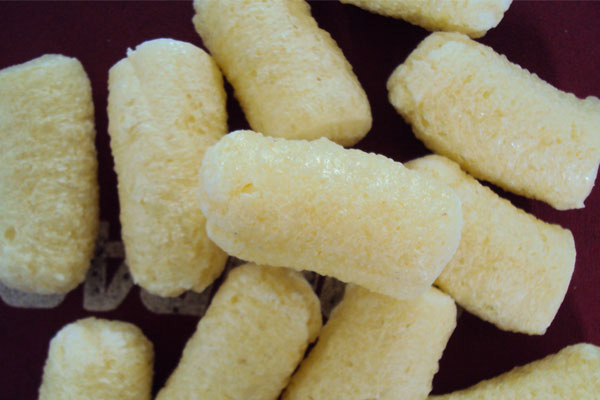
2. If the steam pressure temperature is too high, the corn flour will be over-expanded, causing the expanded corn to appear white and lose its nutritional value; if the steam pressure temperature is too low, the corn flour will be insufficiently expanded, resulting in raw flour and excessive moisture content (analyze in relation to the principle of the extruder).
3. If the screw pitch and die hole diameter are too large, the pressure during extrusion will be insufficient, leading to inadequate expansion, raw flour, and excessive moisture content; if the screw pitch and die hole diameter are too small, the pressure during extrusion will be too high, causing over-expansion, with the expanded corn appearing white and losing its nutritional value.
4. If the expanded corn is cooled in a cold discharge (high fan airflow, long cooling time), the moisture content will be lower; if the expanded corn is discharged hot (low fan airflow, short cooling time), it is prone to excessive moisture content.