Summary of Solutions for Production Capacity Issues of Extrusion Equipment
Summary of Solutions for Production Capacity Issues of Extrusion Equipment
I. Analysis of Production Capacity Issues
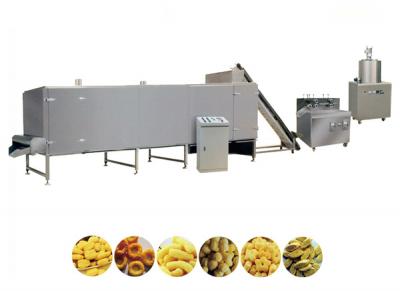
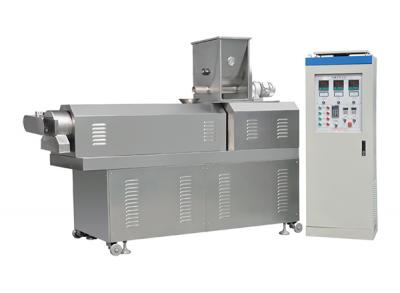
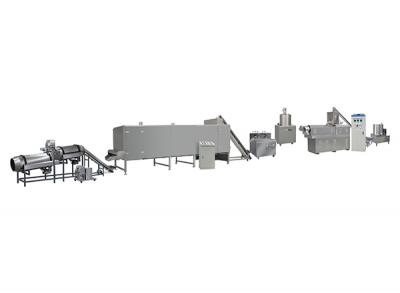
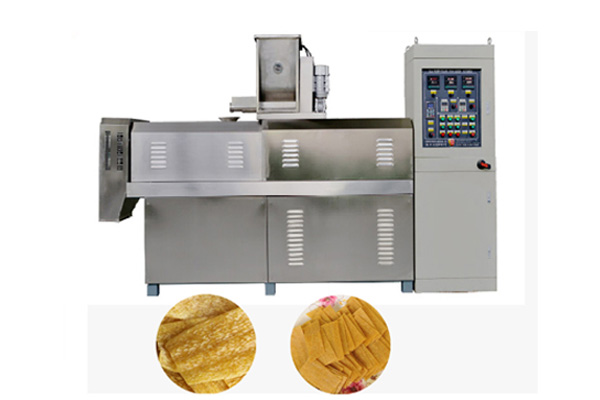
Extrusion machinery is one of the commonly used equipment in the food processing industry. Its main function is to heat and pressurize raw materials through the extrusion process, then rapidly release pressure, causing the raw materials to expand into a porous state, thereby enhancing food texture and fluffiness. However, in actual production, we often encounter the problem of insufficient production capacity of extrusion machinery, which limits production efficiency and capacity improvement. Below is a summary of the analysis and solutions for the production capacity issues of extrusion machinery.
II. Analysis of Production Capacity Issues
1. Unreasonable equipment design: The production capacity of puffing machinery is directly related to its design parameters, such as heating capacity, pressurization capacity, and volume. If the equipment design is unreasonable or the parameter settings are inappropriate, it will limit the equipment's production capacity.
2. Low technical level of operators: Operating puffing machinery requires a certain level of technical skill and experience. If the operators have a low technical level, it can easily lead to unstable equipment operation, frequent switching, long downtime, and other issues, thereby affecting the equipment's production capacity.
3. Improper selection of raw materials: Extrusion machinery has high requirements for raw materials, such as moisture content, particle size, and quality. If the raw materials are not selected properly, it can easily lead to unstable equipment operation and poor product quality, thereby affecting the equipment's production capacity.
4. Inadequate maintenance: As a type of mechanical equipment, extrusion machinery requires regular maintenance, including lubrication, cleaning, inspection, and replacement of parts. If maintenance is not carried out properly, the equipment is prone to malfunctions and unstable operation, thereby affecting its production capacity.
III. Solutions
To address the above production capacity issues of extrusion machinery, corresponding solutions can be implemented from the following aspects to improve the equipment's production capacity and efficiency.
1. Equipment design improvement: Optimize the design parameters of puffing machinery to adapt to the processing requirements of different raw materials and enhance production capacity. For example, improve heating and pressurization capabilities, and increase equipment capacity.
2. Operator training: Provide training for operators on the key operational points and technical requirements of puffing machinery to improve their technical skills and operational abilities. At the same time, strengthen management and supervision of operators to ensure they operate the equipment according to standards, reducing equipment failures and downtime caused by improper operation.
3. Raw material quality control: Establish a strict raw material procurement and screening system to ensure the selection of materials that meet equipment requirements. At the same time, strengthen the quality inspection and monitoring of raw materials to promptly identify and resolve issues that may affect equipment capacity.
4. Maintenance management: Establish a comprehensive equipment maintenance system, regularly performing lubrication, cleaning, and repair or replacement work on equipment. At the same time, strengthen equipment inspections and troubleshooting to promptly identify and resolve equipment issues, ensuring normal operation and capacity improvement.
5. Technological innovation and equipment upgrades: Keep an eye on the industry and equipment, actively collaborate with equipment manufacturers and R&D institutions to carry out technological innovation and equipment upgrades, introduce more advanced and efficient puffing machinery, and enhance equipment capacity and processing efficiency.
In summary, to address the capacity issues of puffing machinery, efforts such as optimizing equipment design, improving operator technical skills, controlling raw material quality, strengthening maintenance management, and pursuing technological innovation and equipment upgrades can effectively resolve capacity problems and boost equipment capacity and production efficiency.