The difference between dry and wet methods of puffed dog food
The processing of dog food mainly refers to the process of using various methods and techniques to shape multiple or single raw materials, thereby improving the nutritional value, palatability, and digestibility of pet food to maximize its potential nutritional and usage value.
The processing scope of pet food dog food is very broad, including pet leisure snacks, treats, dental chews, knotted bones, pressed bones, nutritional supplements (liquids), concentrated dog food powder, dry food, wet food, semi-moist food, canned food, and more. To maximize its nutritional functionality, different raw materials undergo various forms and degrees of processing.
The processing of expanded dog food is generally divided into three categories: physical methods, chemical methods, and microbial methods. Physical methods mainly involve extruding, heating, grinding, and binding the raw materials; chemical methods include starch modification and protein degradation; microbial methods refer to fermenting certain raw materials. Here, a brief introduction to the expansion processing technique within physical methods is provided:
First, let's understand the concept of puffing in the processing of dog food. Puffing is a food processing method where the food being processed is placed in a sealed container, heated and pressurized, and then suddenly depressurized. The moisture in the food vaporizes and expands, creating many small holes in the food, making it crispy and producing puffed food. The basic principle is to allow the raw materials to expand by suddenly reducing pressure under conditions of heat and pressure.
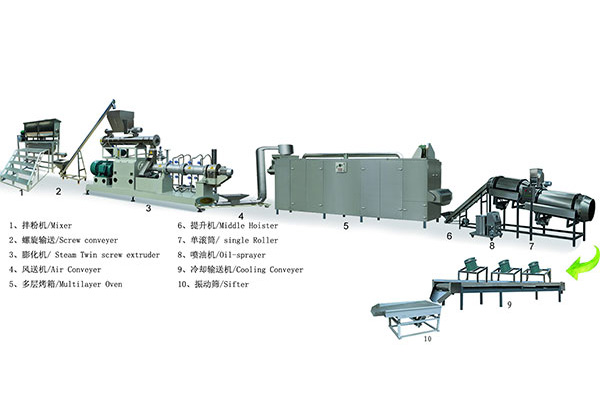
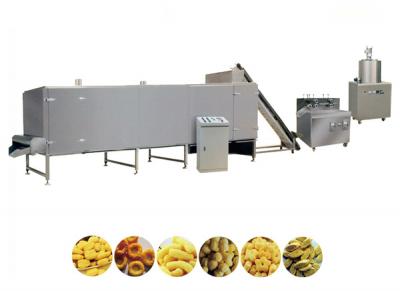
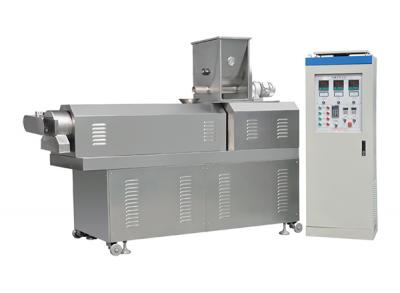
As a novel food processing technology, puffing technology originated in 1910. Its application in pet food began in the 1950s in the United States, where the extrusion principle was first used to produce pet food. This process involves using the screw and barrel of an extruder to compress the raw materials, raising their temperature and pressure, and then forcing the high-temperature, high-pressure food through a die. The sudden pressure drop causes the volume to expand rapidly.
The main purpose of using the puffing process in the manufacturing method of dog food is:
1. To improve the palatability of pet food;
2. To change or enhance the nutritional value of pet food;
3. To increase the digestion and absorption rate of food by pets;
4. Change the shape and structure of pet food to make it easier for pets to consume; 5. Adjust the content of different nutritional indicators in pet food, such as reducing moisture to extend the shelf life of the product, which is beneficial for storage; 6. Alter the bulk density of the food, using extrusion pelleting and briquetting to increase the bulk density; 7. Eliminate various molds, Salmonella, and other harmful substances to improve the safety and hygiene of pet food. Based on the above objectives, we will analyze and compare two different extrusion methods in the dog food puffing process. Extrusion using a screw can be divided into two types: dry extrusion and wet extrusion.
In dry extrusion processing, water needs to be added to the raw materials during production. The raw materials are not pre-conditioned before entering the extrusion chamber, and all the heat generated during the extrusion process is produced by the raw materials under mechanical pressure through the screw, shear plate, and extrusion chamber.
The difference between wet extrusion and dry extrusion is that in wet extrusion, the raw materials are pre-conditioned before entering the extruder, using steam or water to increase temperature and pre-cook them. The so-called conditioning refers to the application of heat and moisture to pet food raw materials through steam, causing pre-gelatinization of starch, denaturation of protein, and softening of raw materials, thereby improving the extrusion granulation effect and quality of dog food.
In the wet extrusion processing technology of dog food, the pre-conditioning technique holds very significant importance.
1. Improve the capacity for extrusion and pelleting by pre-conditioning the raw materials with steam through a hydrothermal reaction, softening them for better shaping while reducing mechanical wear. 2. Increase the bulk density of pellets through pre-conditioning technology, reduce dust content, minimize losses during dog food processing, and maintain a hygienic production environment. 3. Promote starch gelatinization and protein denaturation, enhancing pet digestion and absorption of food. According to data, when steam-conditioned, the starch gelatinization rate can reach 35%–45%, whereas without steam pre-conditioning, it is only 15%. 4. More thoroughly eliminate harmful bacteria. During the pre-conditioning process, high-temperature steam can kill most E. coli and Salmonella, significantly improving the safety and hygiene standards of pet dog food. 5. Through conditioning technology, liquid nutritional ingredients can be easily added, enhancing the nutritional value of pet food. Additionally, wet extrusion offers advantages such as good pelleting effects and stable expansion rates. In dog food processing, adopting wet extrusion and pre-conditioning technology plays a crucial and significant role. However, compared to dry extrusion, it has drawbacks such as expensive equipment, high equipment requirements, and complex operation.
According to the tempering method, there are two types: the dry extrusion puffing method and the wet extrusion puffing method mentioned above. Based on the screw structure of the puffing equipment, it can also be divided into single-screw extrusion puffing and twin-screw extrusion puffing.
The single-screw extrusion puffing method has a relatively simple process and is widely applicable. It can be used for products with high moisture content and fat content exceeding 17%, while achieving a starch gelatinization degree of over 90%.
Compared to the single-screw extrusion puffing method, the twin-screw extrusion puffing method involves more complex equipment and structure. However, it offers advantages such as stable puffing performance, high product yield, high production efficiency, and the resulting product being essentially sterile after puffing.