Working Principle of Twin-Screw Extrusion Equipment
1. Structure of Twin-Screw Extruder
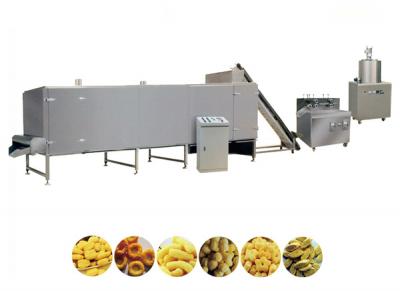
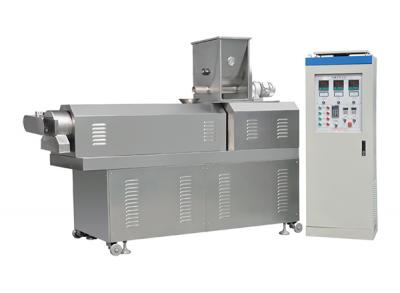
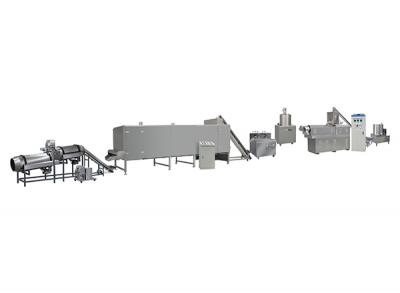
The mixed material is transported to the conditioner via a conveying device. In the conditioner, the material is tempered by high-temperature steam and then enters the extruder through the feed hopper. It is conveyed by a pair of intermeshing parallel screws and instantly extruded and cut into pellets through the installed die holes. The pellets are formed immediately upon extrusion.
2. Expansion Principle of Twin-Screw Extruder
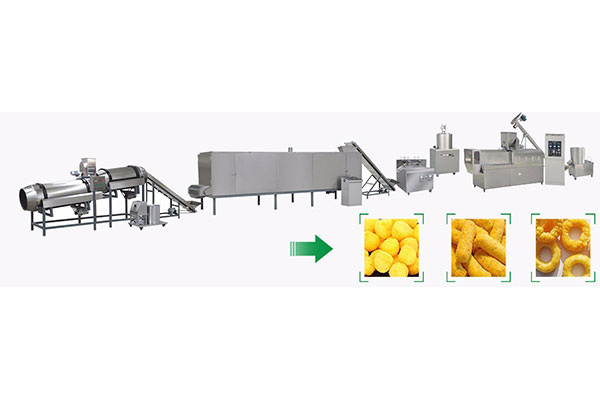
The typical twin-screw extruder's extrusion mechanism uses a pair of parallel intermeshing screws to push the raw material toward the die. The screw is divided into three sections: the feeding section, the compression and melting section, and the uniform conveying section. In the feeding section, the material enters the barrel from the hopper and is conveyed forward along the helical groove as the screw rotates, gradually becoming compacted. Upon entering the compression and melting section, due to changes in the screw structure, pressure increases. Additionally, under the influence of external heating from the barrel and the intense stirring, mixing, and shearing between the two screws and between the screws and the barrel, the material temperature rises, begins to melt, and eventually becomes fully molten. As the screw channel space further decreases, the material temperature and pressure continue to rise, undergoing cooking, which fully gelatinizes the starch and denatures fats and proteins through a series of complex biochemical reactions. The structure becomes further homogenized, reaching the uniform section, where the material exiting the extrusion chamber is evenly distributed onto the die plate via a flow divider. At this point, the pressure is typically 3–6 MPa (depending on extrusion requirements), and the temperature can reach 150–200°C. Since such high pressure in the sealed barrel exceeds the saturated vapor pressure at the extrusion temperature, moisture does not evaporate rapidly. When the material is instantly extruded through die holes of a specific shape, the pressure is quickly released, free moisture evaporates rapidly, and the material expands. Moisture rapidly dissipates from the material, cooling the product to about 80°C, thereby solidifying and setting it while maintaining its expanded shape.