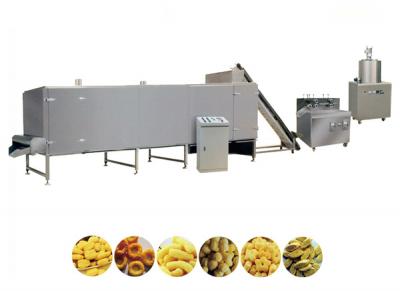
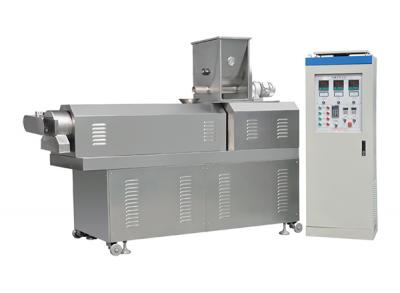
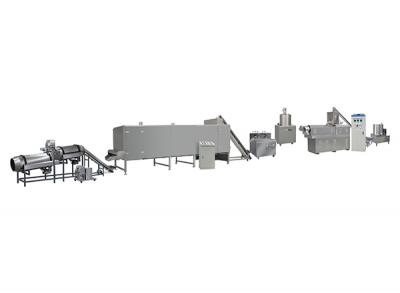
Wet and dry feed extrusion machinery
There are two types of extruded feed using twin-screw feed extrusion machinery: dry extrusion and wet extrusion. Below, we analyze and compare these two different extrusion methods in the dog food extrusion process. Dry extrusion requires adding water to the raw materials during production. The raw materials are not preconditioned before entering the extrusion chamber, and all the heat generated during the extrusion process is produced by the mechanical compression of the raw materials through the screw, shear plate, and extrusion chamber.
The difference between wet extrusion and dry extrusion lies in the pre-conditioning of raw materials before extrusion, where steam or moisture is used to increase temperature and pre-cook the materials. The so-called conditioning refers to the thermal and moisture treatment of pet food raw materials through steam, which pre-gelatinizes the starch, denatures the protein, and softens the raw materials, thereby improving the extrusion and pelleting effect and enhancing the quality of the extruded dog food.
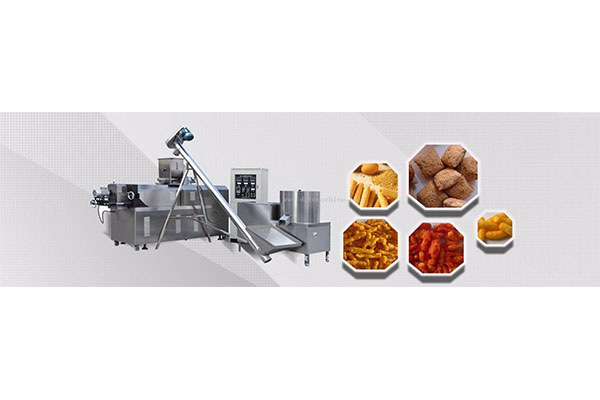
Wet extrusion also has the advantages of good puffing effect and stable expansion rate. In the dog food processing process, the use of wet extrusion and preconditioning technology plays a very important role and significance. However, compared with dry extrusion, it also has disadvantages such as expensive equipment, high equipment requirements, and cumbersome equipment control. According to the quality adjustment method, it is the aforementioned dry and wet extrusion methods. It can be divided into single-screw feed extrusion machinery and twin-screw feed extrusion machinery.
The extrusion process of single-screw extrusion equipment is relatively simple and widely used. It can be used for products with high moisture content and fat content greater than 17%, achieving a starch gelatinization degree of over 90%. Compared with single-screw feed extrusion machinery, twin-screw feed extrusion machinery is more complex in equipment and structure, but it offers advantages such as stable extrusion performance, high product yield, high production efficiency, and being essentially sterile after extrusion. In recent years, extrusion technology has been widely applied in the processing of pet food and dog food, especially after the 1980s, when it rapidly developed in pet food, semi-moist food, and other snack foods. Extrusion technology has greatly improved the palatability, nutrition, digestion, and absorption of pet food.