Nutritional value analysis of products produced by corn flake equipment
Corn flakes are a crispy food made from grains as the basic raw material, processed by corn flake equipment into granular, flake-shaped, or animal-shaped nutritious convenience foods. Their prominent feature is being rich in complex carbohydrates and dietary fiber. Moreover, corn flake breakfast cereal foods can be fortified with many trace elements, such as vitamins and minerals, and can also be added with cocoa and sugars like honey and maltose. After mixing with coffee, milk, yogurt, or functional beverages, they can be consumed directly. Children can also enjoy breakfast cereal foods as sweet and crispy leisure snacks.
Nutritional value of corn flake equipment
1. High linoleic acid content. Corn contains 2% linoleic acid, which is higher than in most cereal grains. If corn accounts for more than 50% of the diet, it alone can meet the linoleic acid requirement (1%) for pigs and chickens.
2. Protein content is low and of poor quality. Corn has a protein content of about 8.6%, with an imbalanced amino acid profile, lacking sufficient lysine, tryptophan, and methionine.
3. Minerals. About 80% of minerals are found in the germ, with very low calcium content at about 0.02%; phosphorus is about 0.25%, but approximately 63% of it exists as phytate phosphorus, which has low bioavailability for monogastric animals. The levels of other mineral elements are also low.
4. Vitamins: Among fat-soluble vitamins, vitamin E is relatively abundant, about 20 mg/kg. Yellow corn contains a higher amount of carotene, while vitamins D and K are almost absent. Among water-soluble vitamins, thiamine is relatively high, while riboflavin and niacin are low, with niacin existing in a bound form.
5. Lutein: The average lutein content in yellow corn is 22 mg/kg, which is one of its characteristics. It plays an important role in coloring egg yolks, shanks, and claws.
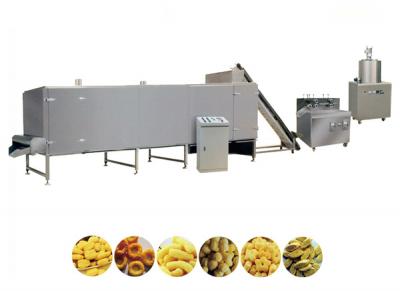
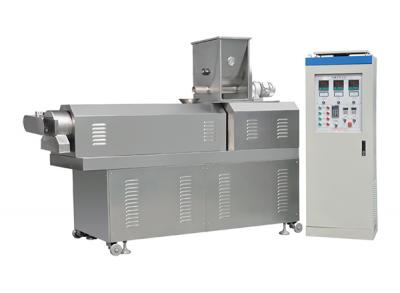
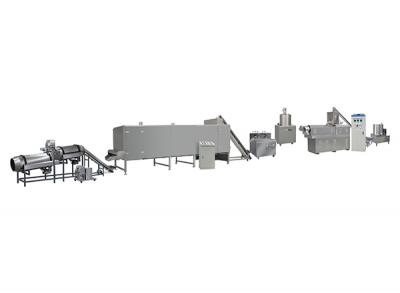
After continuous production and practice, corn flake equipment has been constantly improved, with increasing automation and significant changes in the production process. The raw material has evolved from corn kernels to corn flour, and the cooking method has been changed to continuous use of a twin-screw extruder. Granulation and shaping are also completed in one step within the extruder. After pre-drying, the flakes are formed by pressing, resulting in a more uniform product with better texture. The high baking temperature enhances the flavor of the product. Advanced industrial equipment and production lines have formed the following production process for Jinan Dingrun breakfast cereal corn flakes:
Corn flour, sugar, salt, other nutrients → mixing ingredients → twin-screw extrusion cooking → cutting and shaping → pre-drying → flaking → high-temperature baking → corn flakes equipment process description:
1) Ingredients: The ingredients for corn flakes are very important. The seasoning must ensure a good taste, especially the requirements for corn raw materials, which directly affect whether high-quality corn flake products can be produced. Additionally, the proportion and content of various nutrients are also crucial.
2) Extrusion and maturation molding: The extrusion and maturation molding process of corn flakes is key to producing high-quality corn flakes. When Will Keith Kellogg invented corn flakes, the process required the corn to be fully matured without any puffing, only then could dense, hard, crispy, and aromatic corn flakes be made.
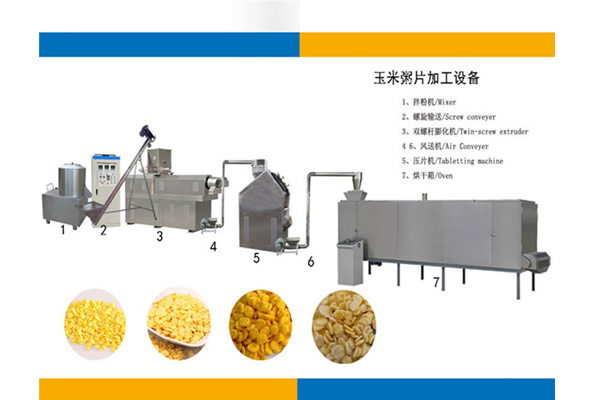
3) Cutting: The material after extrusion and maturation in the twin-screw extruder is cut into uniformly sized granular materials, which appear translucent.
4) Pre-drying: The cut and shaped material enters a dryer for pre-drying. After drying, the surface forms a certain tension, preventing the pieces from sticking to each other, which facilitates smooth pressing.
5) Flaking: The flaking process is also crucial in the production of corn flakes. High demands are placed on the flaking machine; the roller surface must have a high degree of smoothness, and the rollers must maintain a constant temperature.
6) High-temperature baking: The baking process is essential for achieving a hard, crispy, and dense texture in corn flakes, as well as for bringing out the distinctive corn flavor.
7) After baking, the corn flakes are cooled to become the final product. Nowadays, many corn flakes undergo further processing, such as coating with sugar, salt roasting, or chocolate coating, mostly determined by market demand.