Principle, uses and production method of pregelatinized starch
Principle of pregelatinized starch
The process in which starch granules swell, split, and form a uniform paste-like solution in water at an appropriate temperature (the required temperature varies depending on the starch source, generally 60–80°C) is called gelatinization. The essence of gelatinization is the breaking of hydrogen bonds between ordered and disordered (crystalline and amorphous) starch molecules within the granules, dispersing them in water to form a colloidal solution.
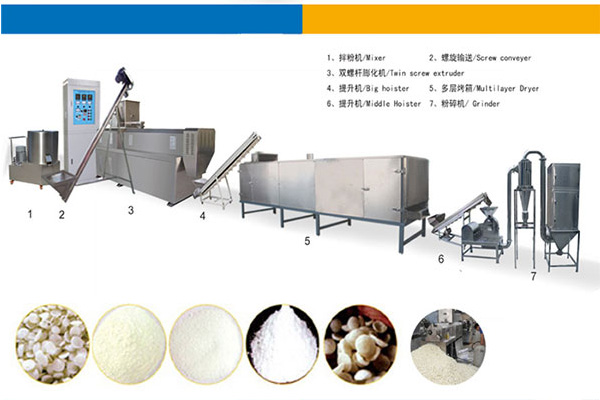
Production method of pregelatinized starch:
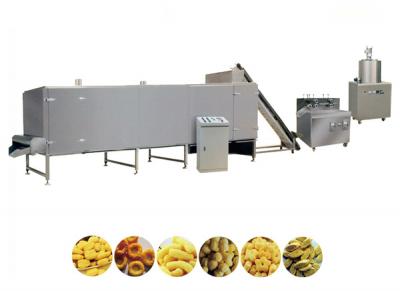
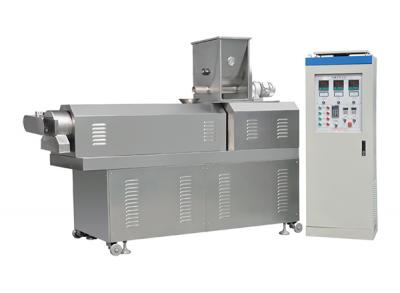
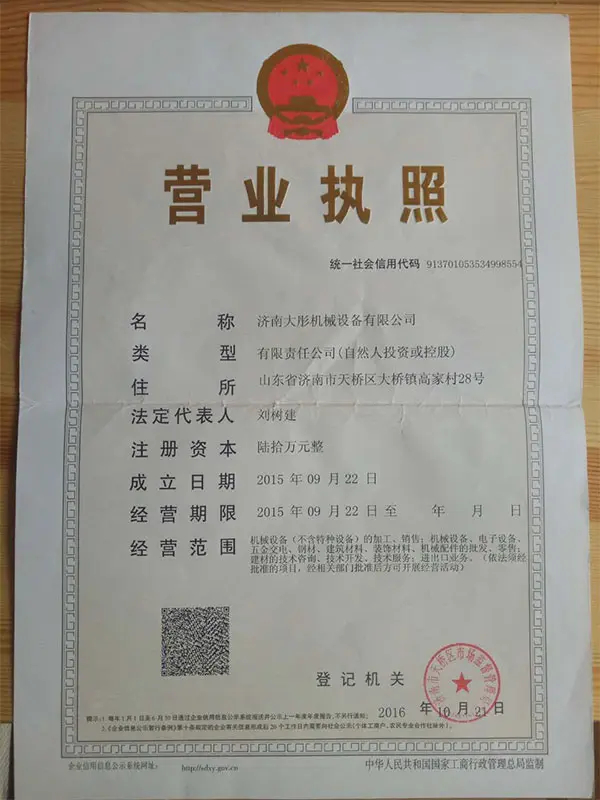
The pregelatinized starch equipment currently supplied by Jinan Datong Machinery Equipment Co., Ltd. adopts a screw extrusion puffing machine. According to the puffing principle, the pre-mixed wet starch is added into the extrusion puffing machine. The starch is gelatinized by the heat generated from friction and extrusion of the screw shaft, and then extruded through small holes with a diameter of 1-10 mm under high pressure. Once the material enters the atmosphere, it instantly expands and dries. After crushing and screening, pregelatinized starch is obtained. Since basically no water is needed during the manufacturing process, the internal friction heat can maintain a temperature of 120-160°C, and no heat source is required for drying. Therefore, this set of pregelatinized starch equipment is recognized as an economical method.
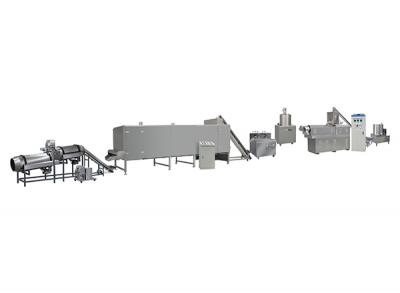
Composition of pregelatinized starch equipment:
1. Mixer: Mix the raw materials required for pregelatinized starch production according to the formula. Different models of mixers can be selected based on the production line capacity.
2. Feeder: Screw-type material conveying ensures convenient and fast feeding, reducing secondary contamination from manual contact.
3. Twin-screw extruder: Depending on the production line capacity, Datong Company offers different models of extrusion machines, with outputs ranging from 100 kg/h to 1000 kg/h.
4. Air conveyor: Transports the cut pregelatinized starch blanks to the grinding unit.
4. Ultrafine grinding unit: Specially developed ultrafine grinders for pregelatinized starch characteristics, available in different models.
Characteristics and uses of pregelatinized starch:
1. Application in food: It can be used to save heat treatment while requiring thickening, shape retention, etc., improving the quality of pastries and stabilizing the internal structure of frozen foods. Pregelatinized starch is mainly used in the food industry to make soft puddings, gravy fillings, pastes, dehydrated soup mixes, seasonings, and fruit chews.
2. Application in certain fish farming: It has the following characteristics: non-toxic, easy to digest, nutritious; transparent; maintains the overall shape of the pellet until the fish finishes eating; not dissolved by solutes in water; does not stick to equipment.
3. Application in the cosmetics industry: Talcum powder is a commonly used skincare product, typically made from talc, starch, and other auxiliary materials. Nowadays, foreign countries use gelatinized starch to replace talc and starch in the production of new talcum powder. In addition to the characteristics of ordinary talcum powder, it also features good skin affinity and strong water absorption.
4. Application in the pharmaceutical industry: New tablets are composed of medicinal ingredients, pregelatinized starch, lubricants, and other components. The gelatinized starch not only serves as a bulking agent but also acts as a binder. This reduces unnecessary side effects caused by adding other binders. It has the characteristics of high strength after molding, easy digestion after ingestion, easy dissolution, and no toxic side effects.
5. Applications in other industries: The characteristic of pregelatinized starch quickly dissolving in cold water to form a high-viscosity starch paste has led to its successful use in many areas. For example, it is used as a sand mold binder in metal casting; widely used as a sizing agent in the textile industry; and used as a water-based coating in the construction industry.