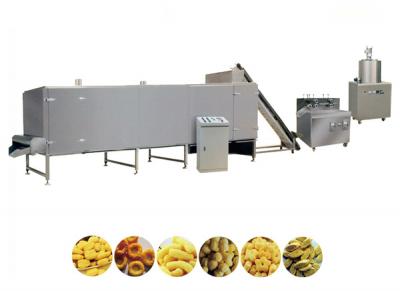
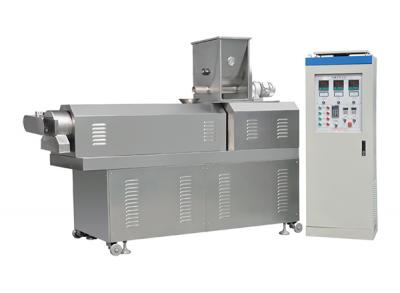
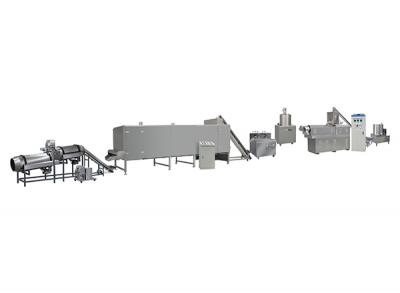
Technical challenges to be overcome in the future development of puffed food production lines
Problems to Overcome in the Future Development of Puffed Food Production Lines
It is understood that puffed food, with its delicious and crispy texture, convenient portability and consumption, wide applicability of raw materials, and diverse flavors, is increasingly becoming a favorite among consumers. As people's living standards continue to improve, it has become an important part of the food industry with huge market potential. The market demand for puffed food has also driven the development of mechanical equipment.
1. Market downturn and product aging issues
Why is the market sluggish? This is inextricably linked to product aging. As is well known, over the years, when different food companies have no new products to launch in the market, they often seek shortcuts by imitating products from other food companies. Due to a lack of fundamental understanding, they only imitate the appearance and shape of products without addressing the shortcomings of their own products. This leads to cutting corners, reducing costs, undercutting prices, and creating a chaotic situation of disorderly competition. Product quality has significantly declined, reducing customer trust in puffed snack foods.
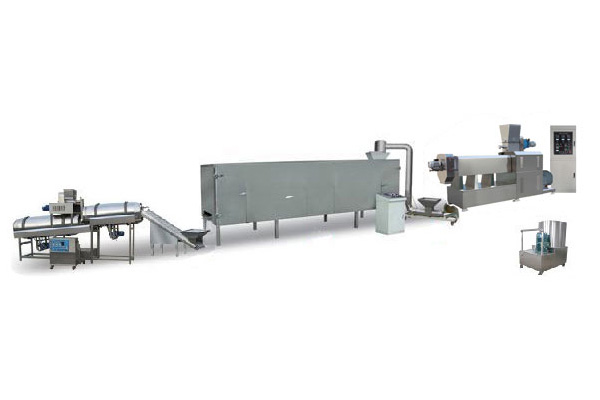
Second, the disconnect between food equipment production and food technology.
Currently, 90% of food equipment manufacturers focus solely on producing equipment while ignoring or overlooking the demands of food production companies for food technology. As a result, many food production companies purchase equipment but fail to produce products that meet market demands. Only by thoroughly addressing equipment, processes, and technology to produce new products that meet market demands and incorporate food technology can food equipment manufacturers satisfy the needs of food companies and market requirements.
III. Requirements for New Product Development and Production Technology
1. New product development is a key to the survival and growth of a company. Successful new products are an important source of company profits and a crucial factor in promoting continuous development, maintaining a leading position, and ensuring a competitive edge.
2. The equipment process specification is the main technical document guiding production. It serves as a guide for production and is also a basis for production organization and management, including equipment, production planning, scheduling, worker operations, and quality inspection.
3. Among them, the requirements for skilled workers are extremely important. First, they must understand emergency handling measures when equipment malfunctions, adjustment methods when production is not going smoothly, and corresponding adjustments when raw material composition changes. Second, there must be specific operating procedures regarding the properties and usage methods of food additives, and coordination between upstream and downstream processes must be ensured.
4. Current market misconceptions about puffed food
People's demands for food are no longer limited to taste but are more focused on health. When it comes to puffed food, it is often associated with high fat, high calories, high salt, high sugar, and high MSG, commonly known as the 'five highs and one excess.' However, many people do not realize that the cause of the 'five highs and one excess' is not the puffing process itself but the large amount of food additives added by manufacturers. Therefore, in the coming industry, the key is to combine technology with equipment to block the 'five highs and one excess' at the source, which should be the responsibility of the puffed food industry going forward.