What should be noted when producing sinking feed with an extruder?
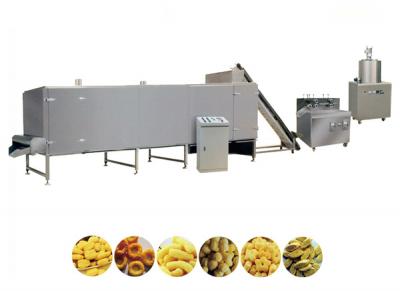
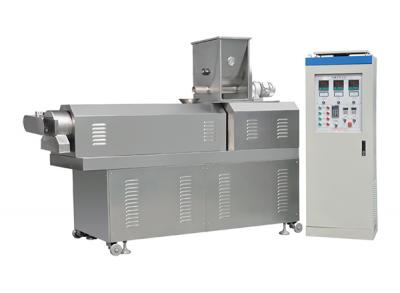
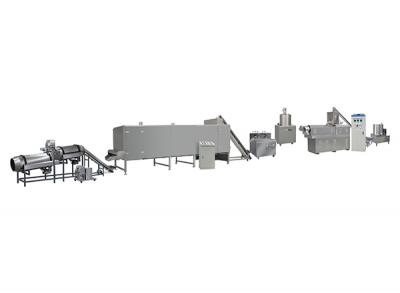
What should Jinan Datong Feed Extrusion Machinery pay attention to when producing sinking feed with an extruder? Below, Jinan Datong engineers provide an introduction:
1. Formula
When designing the formula, attention should be paid to keeping the starch content low but not absent. Generally, it should be greater than 10% and less than 20%. Insufficient starch affects the water resistance of the pellets and increases dust in the finished product, impacting the appearance of the pellets. Additionally, when designing a sinking feed formula, the fat content should be slightly higher than that of floating feed, typically around 5-8%. Furthermore, plant-based raw materials are easier to extrude than animal-based raw materials.
2. Template
The sinking material template has an opening rate more than 40% higher than that of the floating material. The reason is that when producing sinking material, the pressure difference between the inside of the extruder and the atmospheric pressure is smaller, resulting in a lower expansion rate. Additionally, the length-to-diameter ratio is larger than that of floating material, generally around 1:1.8.
3. Screw configuration
When producing sinking feed, attention must be paid to the configuration of the extruder screw. It differs from the configuration for floating feed, as it requires the material to have a shorter residence time in the chamber (on the same equipment, compared to floating feed, floating feed takes 30-35 seconds, while sinking feed takes 20-30 seconds). Additionally, the shear force should be smaller, and the discharge temperature relatively lower. Therefore, when making sinking feed, the screw at the discharge end should not use a cut-off groove screw, and the pressure relief port on the extrusion chamber should be opened as much as possible. Also, the screw after the kneading plate (toward the discharge outlet) should be replaced with one having a steep face toward the discharge end, allowing the material to exit the mold quickly.
4. Moisture control
When producing sinking feed, the water added during conditioning should be appropriately more than that for floating feed (floating feed typically exits the conditioner at around 25%, while sinking feed is generally around 28%). Additionally, 2-3% tap water can be appropriately added in the extrusion chamber, which further facilitates the production of sinking feed.
5. Control of conditioning temperature
Generally speaking, there is not much difference in the temperature of the conditioner for producing floating feed and sinking feed, both being above 90°C, which is conducive to the gelatinization of starch in the material. The gelatinization of sinking feed is generally 70-85%, while floating feed is 80-95%. However, due to design reasons in some sinking feed formulas, the conditioner temperature cannot reach 90°C and can only be around 60-80°C. In such cases, the water addition in the conditioner can be reduced, while the water addition in the extrusion chamber can be increased, which may allow the conditioning temperature to rise.
6. Main shaft speed
The spindle speed of sinking materials is generally 250-400 r/min. For speed-adjustable equipment, such as twin-screw and single-screw extruders, which usually do not have speed adjustment devices, the speed is generally around 350 r/min. The higher the equipment speed, the higher the shear force, and the more mechanical energy the feed absorbs.
If you want to learn about other aspects of the extruder, you can consult Jinan Datong Machinery Equipment Co., Ltd., and we will provide comprehensive consulting services.